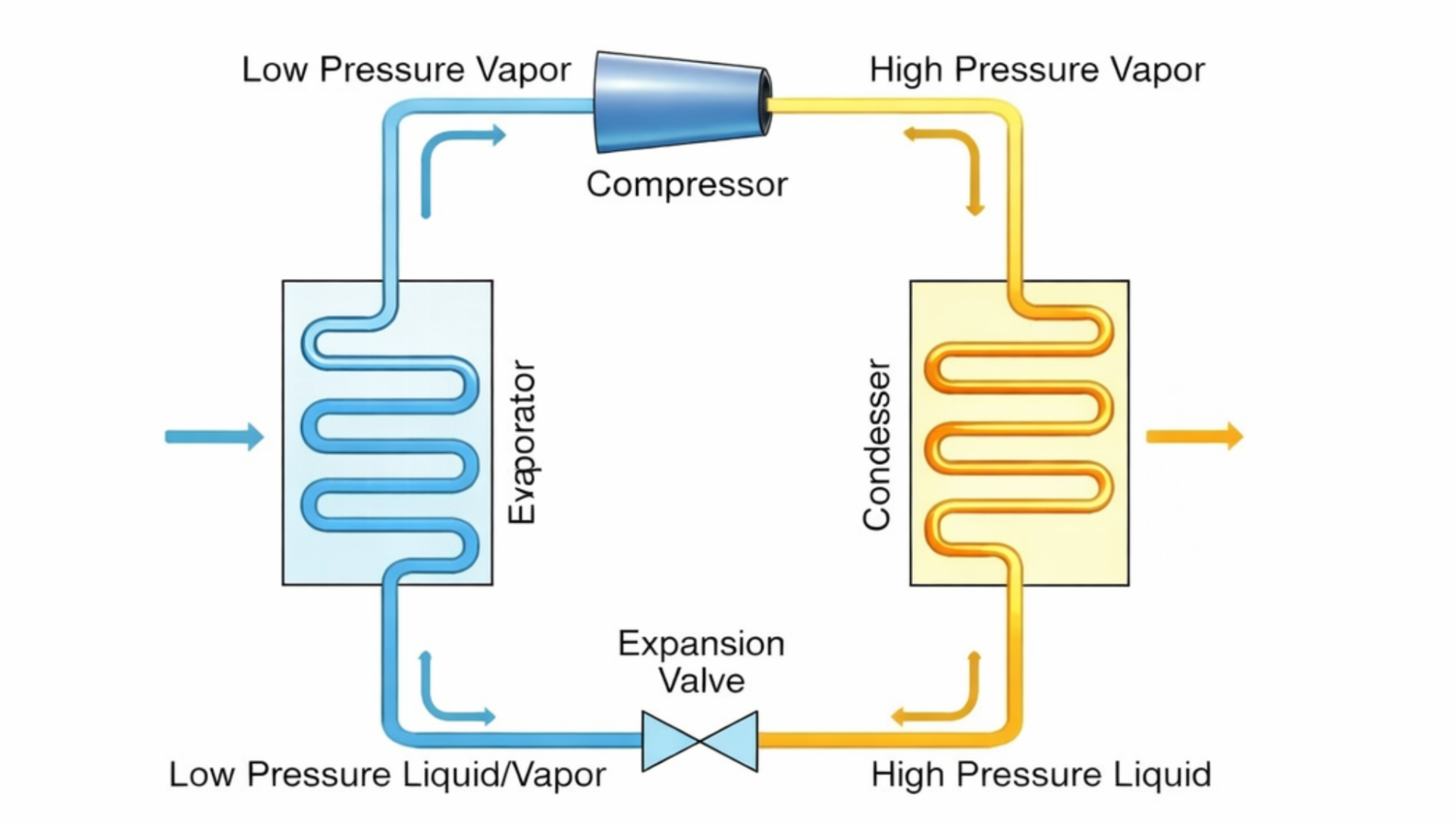
Important Notes for Cold Room System Setup
Proper installation and commissioning of a cold room refrigeration system are critical to ensure long-term performance, efficiency, and reliability. Incorrect procedures may lead to compressor damage, system failure, or reduced cooling efficiency.
The following guidelines outline key precautions during installation and commissioning.
1. Refrigerant Release Before Vacuuming
Before performing vacuuming, it is essential to release all nitrogen gas inside both the outdoor unit and indoor unit.
If nitrogen is not fully released, it may cause damage to the compressor during operation.
2. Oil Return System Installation
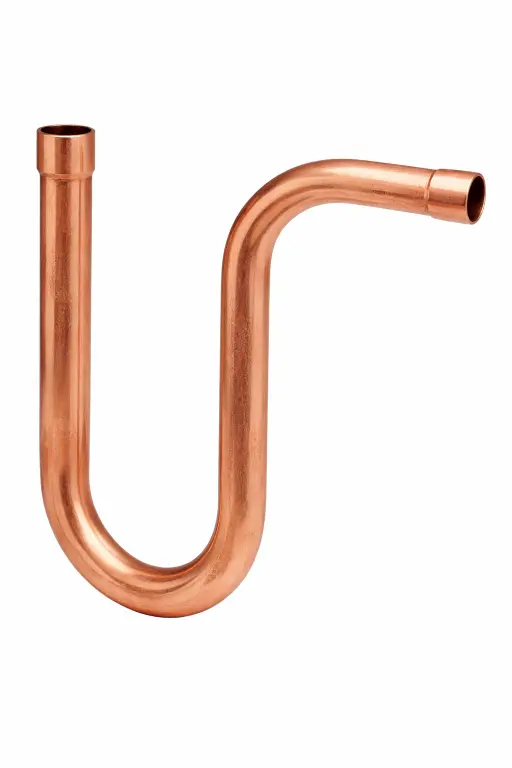
An oil return bend must be installed in the suction line to ensure proper oil circulation.
The oil return bend should be installed on the suction pipe (larger pipe) at the air cooler return side.
Recommended installation requirements:
- The oil return bend should be positioned 10–20 cm away from the evaporator (air cooler)
- This ensures that refrigeration oil carried by refrigerant can return smoothly to the compressor
If the oil cannot return properly, the compressor may suffer from oil shortage, leading to serious damage.
3. Vacuuming Procedure
Before vacuuming:
- The power supply of the outdoor unit must be disconnected
- The solenoid valve must be powered separately
Vacuuming requirements:
- Minimum vacuuming time: 50 minutes
- Both high-pressure and low-pressure sides must be vacuumed simultaneously
Failure to follow these steps may result in damage to:
- Control board of the outdoor unit
- Compressor
4. Refrigerant Charging Rules
After vacuuming is completed, refrigerant charging must follow strict procedures.
Important rules:
- Refrigerant must be charged when the system is stopped
- The solenoid valve must be powered during charging
Charging method:
- Liquid refrigerant must be charged from the high-pressure side
- Gas refrigerant can be supplemented from the low-pressure side
Never charge liquid refrigerant directly into the low-pressure side.
This may cause severe compressor damage.
5. Pressure Protection Connection
The pressure protection system must be correctly connected.
Requirements:
- The pressure protection signal from the unit control board must be connected to the control cabinet protection terminal
If not connected:
- The system will not alarm when pressure is abnormal
- The compressor may be damaged during operation
6. Expansion Valve Installation
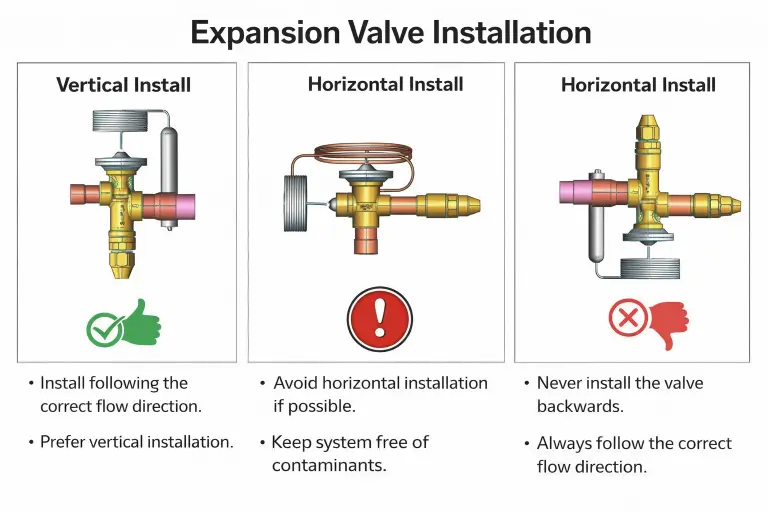
The installation position of the expansion valve is critical.
Key requirements:
- The expansion valve should be installed within 25 cm of the evaporator (air cooler)
- The sensing bulb must be fixed on the copper pipe between the oil return bend and the evaporator
- The correct position is at the 12 o’clock direction on the pipe
After installation:
- The sensing bulb must be insulated properly using insulation material
Incorrect installation may affect system performance and stability.
Conclusion
Correct installation and commissioning are essential for ensuring the safe and efficient operation of a cold room system. Following these guidelines can significantly reduce the risk of system failure and extend the lifespan of key components such as the compressor.
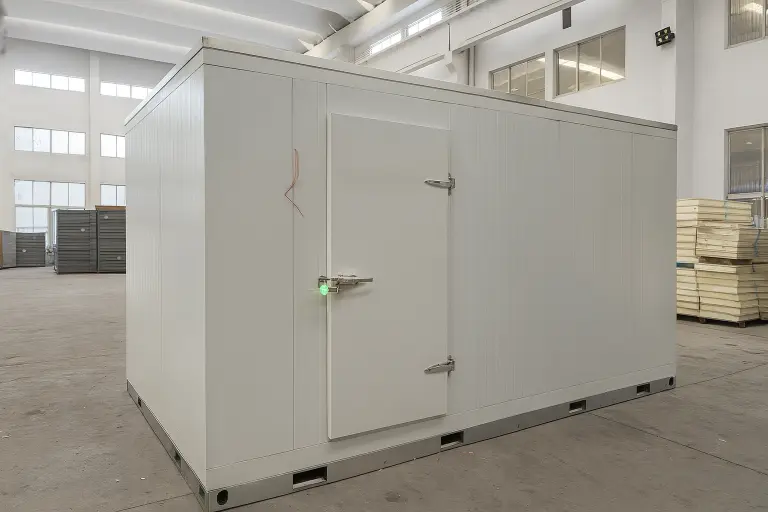
For projects without professional technicians, choosing plug-and-play refrigeration systems or factory pre-installed cold rooms can greatly simplify installation and reduce risks.