
Cold Room Sliding Door
JiangNan manufactures insulated cold room sliding doors for chiller rooms, freezer rooms, processing workshops, logistics cold storage and large refrigerated openings where a hinged door would occupy too much operating space. The door leaf, frame, rail, seal, heating system and opening method are selected according to room temperature, wall panel thickness, traffic frequency and site layout.
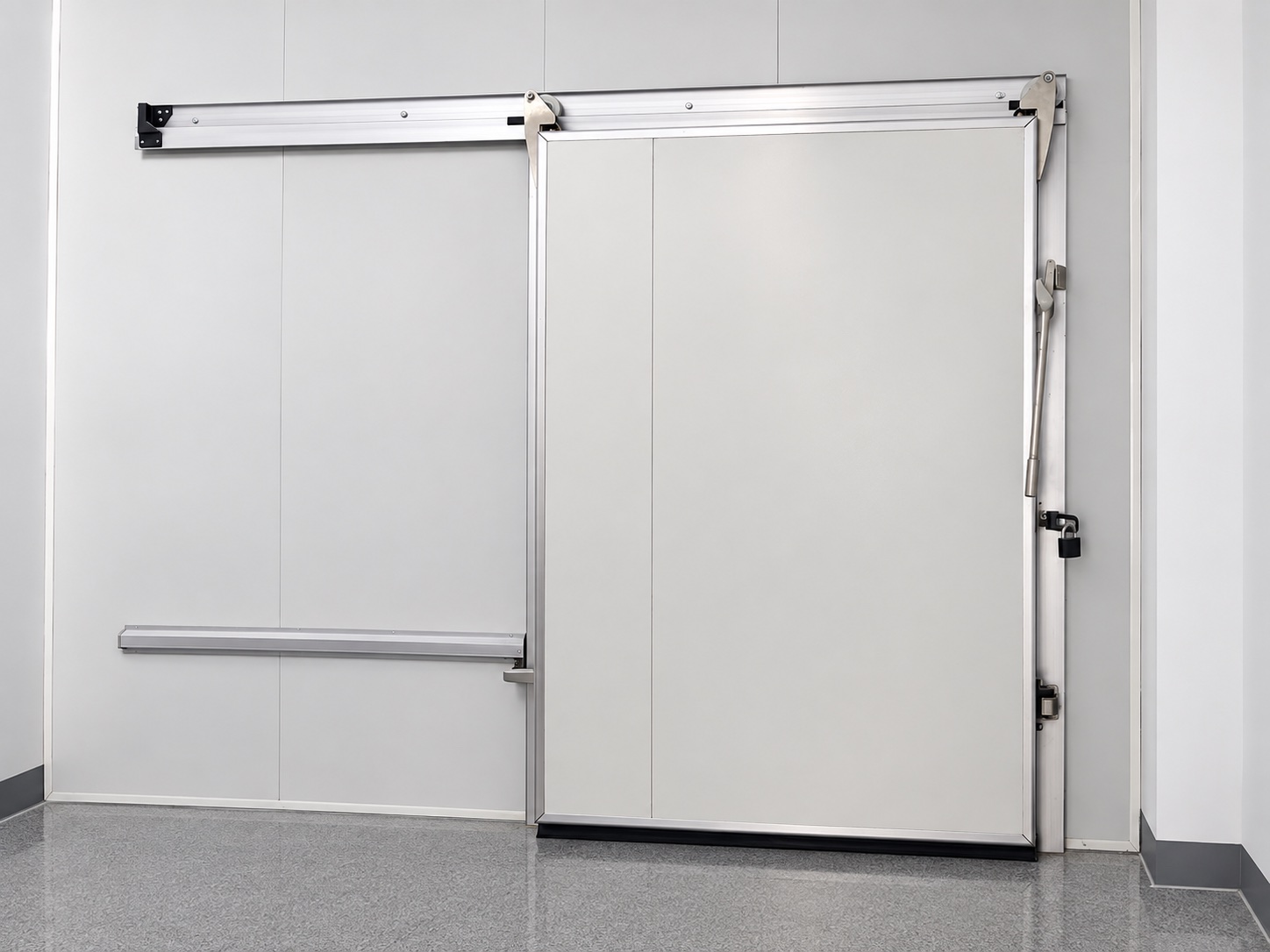
Insulated Sliding Door for Cold Room Openings
A cold room sliding door is used when the entrance needs a larger clear opening, when forklifts or carts pass frequently, or when the aisle does not allow a swing door leaf to open safely. Compared with a standard hinged door, the sliding structure keeps the operating area close to the wall, reducing obstruction around loading zones, processing rooms and warehouse corridors.
For a reliable cold room door, the insulated leaf is only one part of the design. The frame must match the cold room panel thickness, the rail must keep the door leaf stable after repeated operation, the gasket must compress evenly, and low temperature rooms often require electric heating around the frame or sealing area to reduce ice build-up. JiangNan designs the sliding door as part of the complete cold room envelope instead of treating it as an isolated accessory.
Insulated Door Leaf
PU insulated door leaf with steel or stainless steel surface options. Door thickness is selected by temperature, opening size and expected daily traffic.
Matched Frame and Rail
Frame, guide rail, hanging wheel and floor guide are prepared according to wall panel thickness, left or right opening direction and site installation space.
Manual or Electric Operation
Manual sliding doors are suitable for medium traffic rooms. Electric sliding doors can be selected for frequent access, large openings or logistics warehouse operation.
Low Temperature Sealing
For freezer rooms, door heaters, anti-freezing gaskets and correct frame alignment are important to keep the door easy to open and reduce cold loss.
Technical Specifications
Final specifications should be confirmed according to room temperature, wall panel thickness, opening size, traffic frequency and local electrical standard. The table below gives the normal engineering range used for cold room sliding door quotation and design review.
| Door Type | Insulated cold room sliding door for chiller, freezer and cold storage warehouse openings |
|---|---|
| Door Thickness | 75 mm, 100 mm, 120 mm, 150 mm or customized according to temperature and opening size |
| Door Leaf Core | High density PU insulation core; density and structure confirmed by project requirement |
| Heating System | Optional electric heating wire around frame, gasket or threshold area for freezer and low temperature rooms |
| Opening Method | Manual sliding, electric sliding, left opening or right opening according to site layout |
| Temperature Range | Chiller room, freezer room and low temperature cold storage applications from +10 °C to -35 °C by design |
| Motor Brand | Chinese brand or international brand according to project requirement; final model confirmed for electric doors |
| Protection Class | Electrical system normally selected to suit cold room moisture, cleaning condition and operating temperature |
| Surface Material | Color coated steel, stainless steel, embossed aluminum or other project-specified surface material |
| Frame Material | Insulated frame, aluminum alloy frame or stainless steel details according to room type and budget |
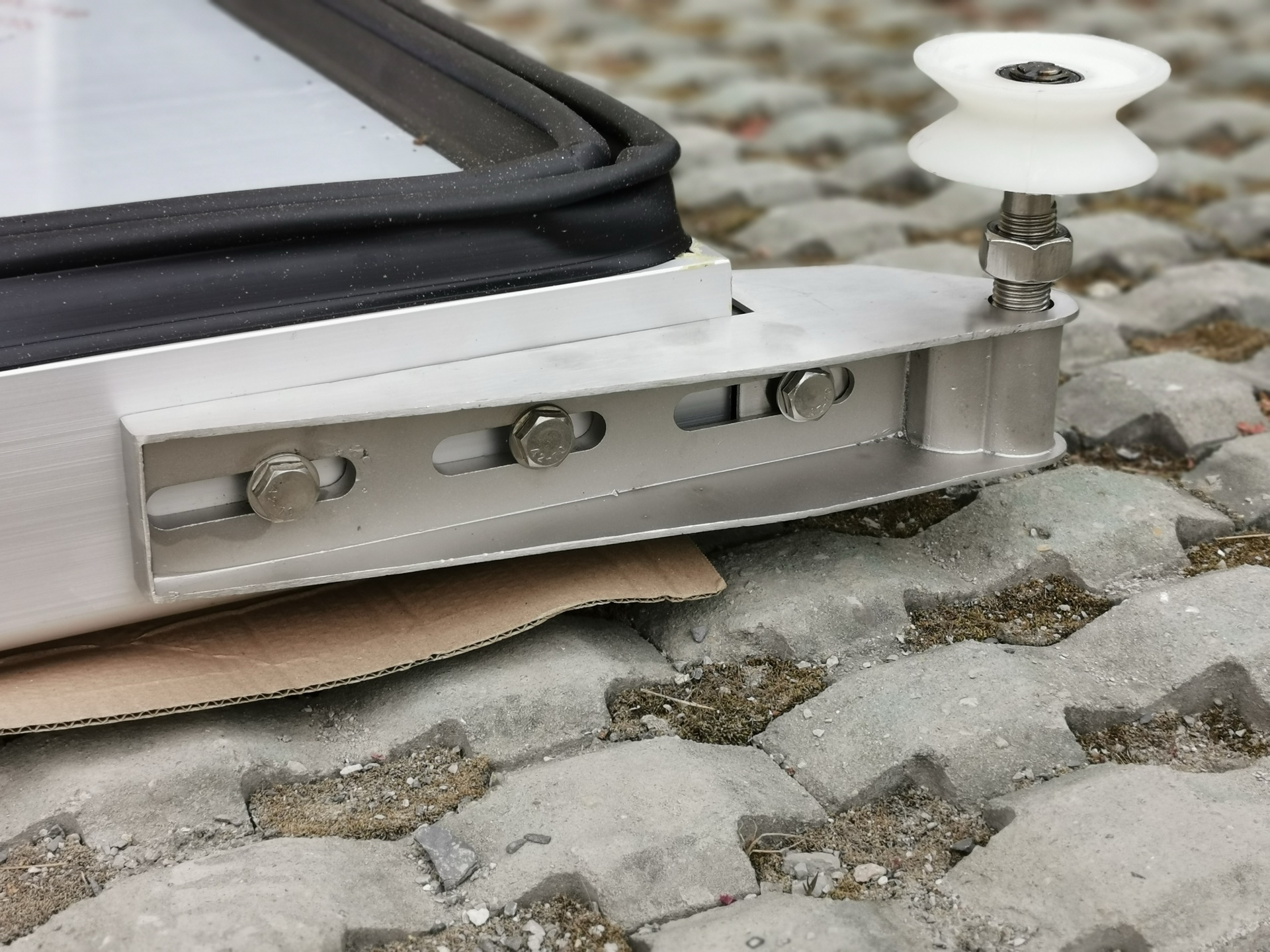
| Rail System | Upper rail, hanging wheel set, stopper, lower guide and adjustable accessories for smooth sliding movement |
| Sealing System | Cold room grade gasket with compression design; freezer rooms can use anti-freezing sealing configuration |
| Available Opening Size | Customized by clear opening width and height; rail space and wall side clearance must be checked before production |
| Safety Options | Inside release, anti-collision protection, safety edge, sensor or emergency stop for electric sliding door projects |
Related Cold Room Sliding Door Projects
The project references below link to existing JiangNan pages. Exact room dimensions and door specifications should be confirmed by project drawing; the table shows typical selection points used during sliding door quotation.
| Project Reference | Temperature | Room Size | Door Thickness | Short Description | Internal Link |
|---|---|---|---|---|---|
| JiangNan Cold Room Project Gallery | 0 °C to -25 °C project range | Confirmed by project layout | 100 mm / 150 mm by design | Reference for cold room openings, project site conditions and door matching with panel systems. | View Projects |
| Supermarket Cold Room | 0 °C to +10 °C chiller zones; freezer zones by design | Back-room storage and display support rooms | 75 mm / 100 mm | Sliding doors help reduce aisle obstruction when staff move goods between storage and sales areas. | Supermarket Cold Room |
| Freezer Room Storage | -18 °C to -25 °C common range | Project dependent | 100 mm / 150 mm | Freezer sliding doors should include correct gasket compression and heating design to reduce icing. | Freezer Room |
| Walk-in Freezer Reference | -18 °C to -25 °C | Small and medium walk-in freezer rooms | 100 mm / 150 mm | Opening width is selected around cart size, traffic frequency and available wall side clearance. | Walk-in Freezer Guide |
| Cold Room Panel System | 0 °C to -35 °C by insulation design | Confirmed by panel layout | Matched to panel thickness | Door frame design must match wall panel thickness, opening reinforcement and cam-lock panel layout. | Cold Room Panel |
Request a Cold Room Sliding Door Quotation
Send your opening size and temperature requirement. JiangNan will provide a sliding door selection suggestion and quotation within 24 hours.
Cold Room Sliding Door Photos
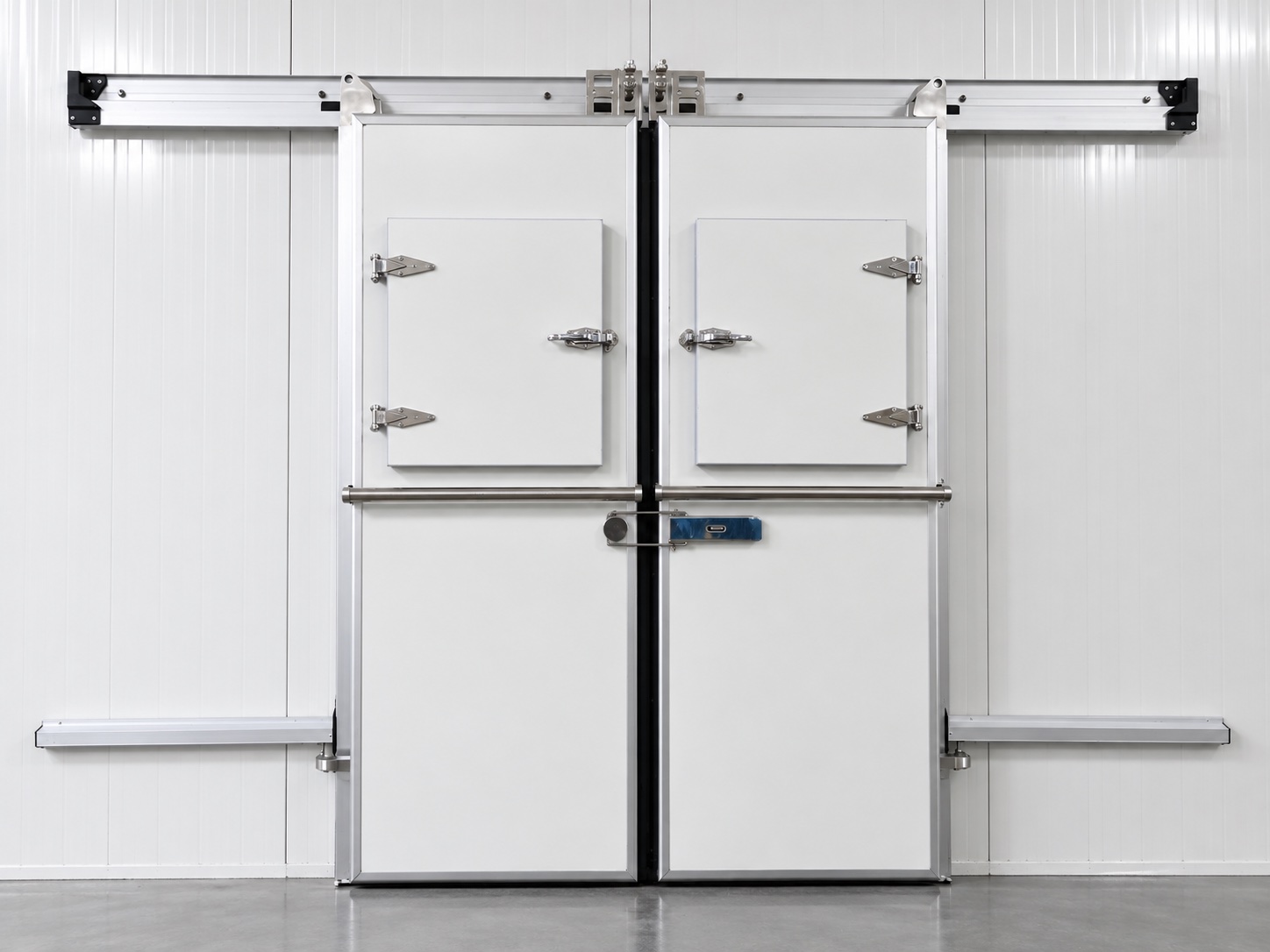
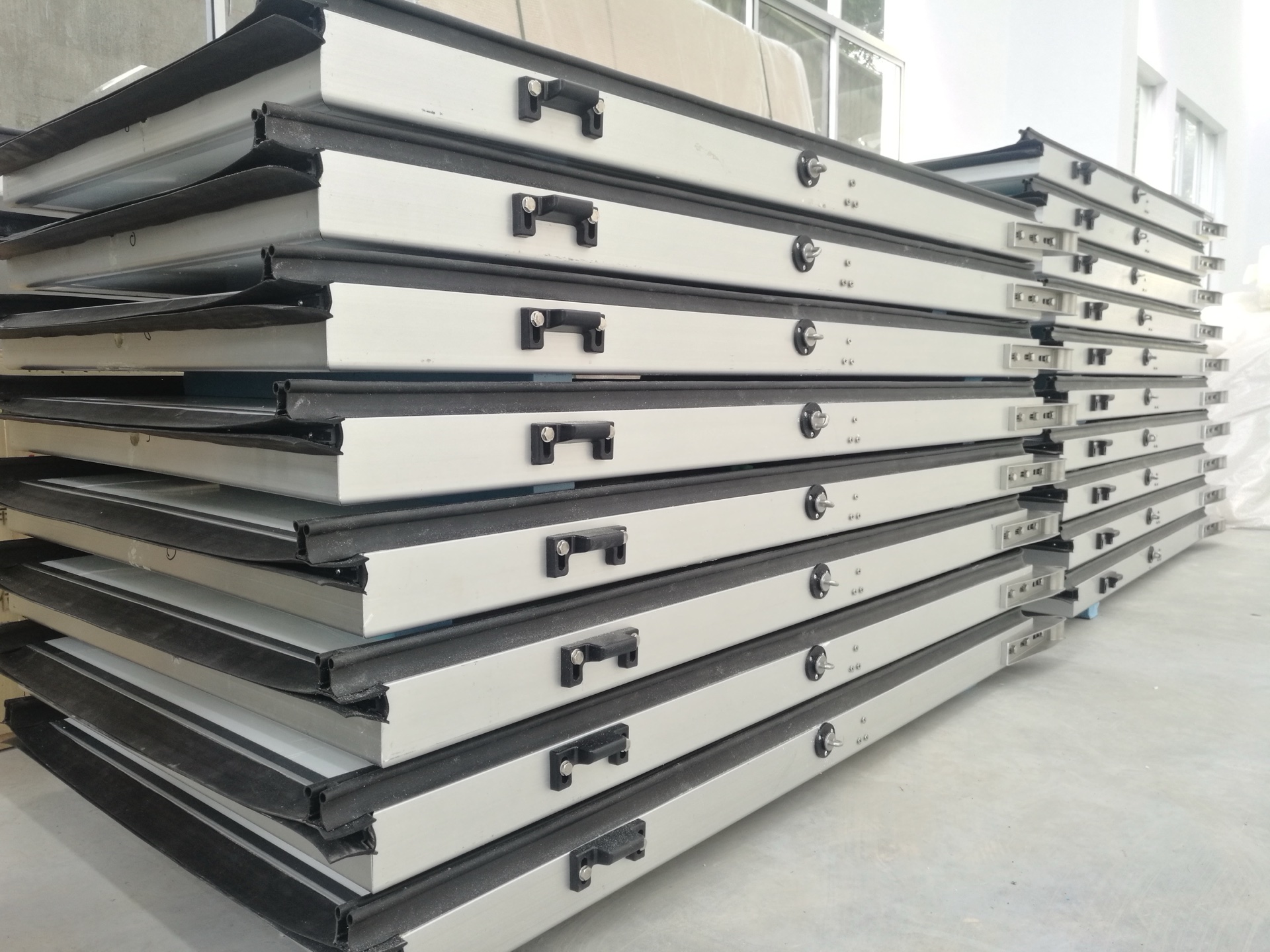
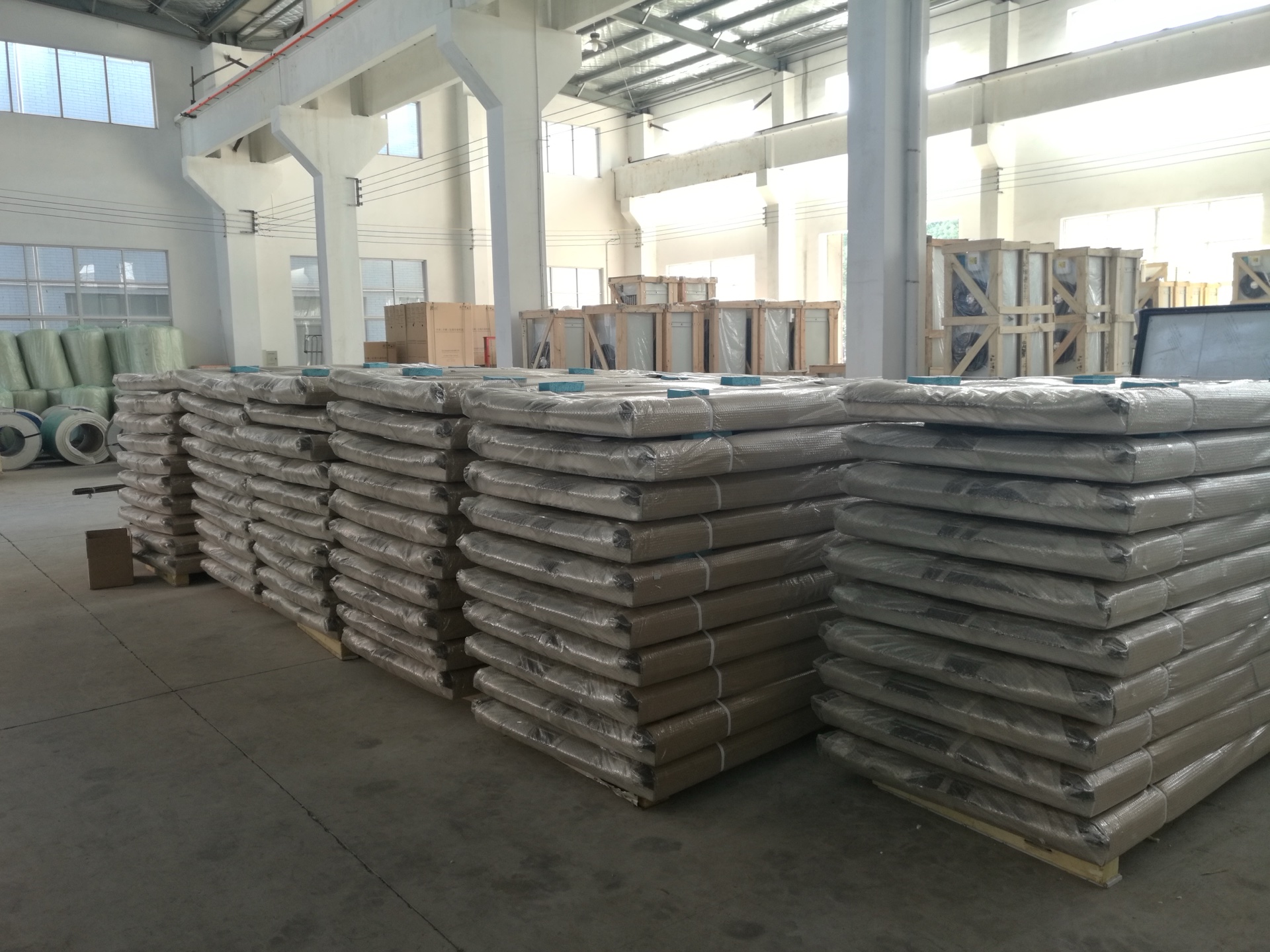
The following images use JiangNan sliding cold room door product photos from the website product image folder. They show the product appearance, rail and leaf structure, front view, hardware installation and door factory assembly area. If a project requires a special handle, stainless steel finish, electric drive or observation window, JiangNan can confirm the detail drawing before production.
How to Select a Sliding Door for Low Temperature Storage
Correct selection starts with the operating condition, not only with the clear opening size. A door used twice per day for a small freezer room can be manual, but a logistics opening with frequent forklift movement may need a stronger rail, larger clearance, anti-collision protection and electric operation. For low temperature rooms, the heater and gasket design are as important as the door leaf thickness.
1. Confirm Temperature Before Door Thickness
For chiller rooms around 0 °C to +10 °C, a thinner insulated leaf may be enough when door traffic is light. For freezer rooms around -18 °C, a 100 mm or 150 mm door leaf is commonly considered. For lower temperature rooms, stronger insulation and a heating system should be reviewed together. The target is not just to block heat transfer, but to keep the gasket area from icing and to keep the door easy to operate.
| Application Temperature | Common Door Thickness Selection | Engineering Notes |
|---|---|---|
| +10 °C to +15 °C | 75 mm | Suitable for service corridors, high temperature cold rooms or preparation areas with limited temperature difference. |
| 0 °C to +10 °C | 75 mm or 100 mm | Used for chiller rooms, vegetable storage, dairy storage and supermarket back-room storage. |
| -18 °C to 0 °C | 100 mm or 120 mm | Recommended for standard freezer rooms; check gasket compression and frame heater requirement. |
| -35 °C to -18 °C | 150 mm | Used for lower temperature storage, frozen food warehouse and processing rooms with stronger cold loss control. |
| Below -35 °C | 150 mm or 200 mm by design | Requires project review for heater layout, air pressure, operation frequency and refrigeration system balance. |
2. Measure Clear Opening and Rail Space
For quotation, provide the clear opening width and height, not only the room size. The side space for the door leaf to slide must be larger than the opening width. The upper wall area must have enough space for rail installation, and the floor should be level enough for the lower guide. If the wall panel is already installed, photos of the opening help avoid wrong frame size or wrong opening direction.
3. Choose Manual or Electric Operation
Manual sliding doors are simple, stable and cost-effective for many small and medium cold rooms. Electric sliding doors are better when workers pass frequently with carts, when the door is large, or when fast closing is required to reduce cold loss. For electric doors, motor position, power supply, control box protection, safety sensor and emergency release must be confirmed before production.
4. Match Door Frame with Cold Room Panels
The door frame must match panel thickness and the structural opening. If the cold room uses cam-lock panels, the panel layout should reserve the opening correctly. When the door is installed in a masonry wall or steel structure opening, the fixing method and sealing interface should be checked separately. Poor frame alignment is one of the common reasons for air leakage, ice formation and hard sliding after installation.
Applications
JiangNan cold room sliding doors are used in cold storage projects where stable temperature, space-saving access and reliable daily operation are required. The same door design can be adjusted for food storage, processing rooms and logistics applications by changing the leaf thickness, surface material, heater and hardware configuration.
- Seafood Cold Storage
- Meat Processing Freezer Room
- Dairy Storage Chiller Room
- Vegetable and Fruit Cold Room
- Pharmaceutical Cold Room
- Cold Chain Logistics Warehouse
- Supermarket Cold Room
- Frozen Food Distribution Center
Installation and Manufacturing Points
Before production, JiangNan checks the opening size, panel thickness, door thickness, surface material, frame type, heater demand and packing method. During installation, the rail should be level, the door leaf should slide without obvious resistance, and the gasket should contact the frame evenly. For freezer rooms, the heating wire should be connected correctly and tested before the cold room is pulled down to temperature.
For export projects, the door leaf and rail parts are packed to reduce damage during container loading. Hardware, heater cable, control accessories and fasteners should be checked against the packing list before installation. If multiple doors are shipped together, each door set should be marked by room number or opening position to reduce site confusion.
Why JiangNan
Established in 1997
Long-term production experience in cold room panels, cold room doors and complete refrigerated storage solutions.
20,000 m² Manufacturing Facility
Factory production supports custom door leaf, frame, hardware preparation and coordinated cold room material supply.
150+ Employees
Production, technical, sales and export teams work together to confirm drawings, packing and shipment details.
OEM and ODM Available
Door thickness, surface finish, hardware, electric operation and packing marks can be adjusted for distributor projects.
Export Experience
Products are prepared for international transport with export packing, container loading consideration and document support.
Complete Cold Room Solutions
Sliding doors can be supplied together with cold room panels, refrigeration units, air coolers and accessories.
Related Products
Related Articles
FAQ
What information is needed to quote a cold room sliding door?
Please send the country, clear opening width and height, wall panel thickness, required temperature, manual or electric operation preference, surface material and quantity. Photos or drawings of the opening are very helpful when the room is already built.
How do I choose between a manual and electric sliding door?
Choose manual operation for smaller openings, lower traffic and simple cold rooms. Choose electric operation when the door is large, carts pass frequently, fast closing is required, or the user wants touchless operation with sensors or push buttons.
What door thickness should be used for a freezer room?
For common freezer rooms around -18 °C, 100 mm or 150 mm is usually considered depending on opening size and traffic. Lower temperature rooms need a project review for insulation, heating wire and gasket configuration.
Does a cold room sliding door need a heating system?
Chiller room doors may not require heating. Freezer doors normally need electric heating around the frame, gasket or threshold area to reduce ice build-up and keep the door easier to open.
Can the sliding direction be customized?
Yes. The door can be designed for left or right sliding. The correct direction depends on wall side clearance, traffic route, shelving position, evaporator position and the location of switches or control boxes.
Can the door be installed on a cold room panel wall?
Yes. The frame can be matched with the cold room panel thickness. The panel layout should reserve the opening and provide enough fixing support for the frame and rail.
What surface material is recommended for food processing rooms?
Stainless steel is often selected for food processing rooms, wet areas or rooms with frequent cleaning. Color coated steel is commonly used for standard storage rooms when budget control is important.
What is the maximum door size JiangNan can make?
The available size depends on door thickness, rail design, operation method and transport limits. Send the required clear opening size and JiangNan will check whether a single leaf, larger rail or electric configuration is more suitable.
How should the door be packed for export?
The door leaf, rail, frame, heater cable and hardware should be protected and marked by door number. For container loading, long rail parts and door leaf surfaces need protection against bending and surface damage.
Can JiangNan supply sliding doors together with cold room panels?
Yes. JiangNan can supply cold room panels, sliding doors, hinged doors, refrigeration units, air coolers and accessories together. This helps keep panel thickness, door frame and installation details consistent.