
Insulated Panel System
Customized PU Panel
Customized PU panel solution for cold rooms, special storage rooms, OEM distributors, and projects that need non-standard thickness, surface material, panel length, joint type, or edge profile.
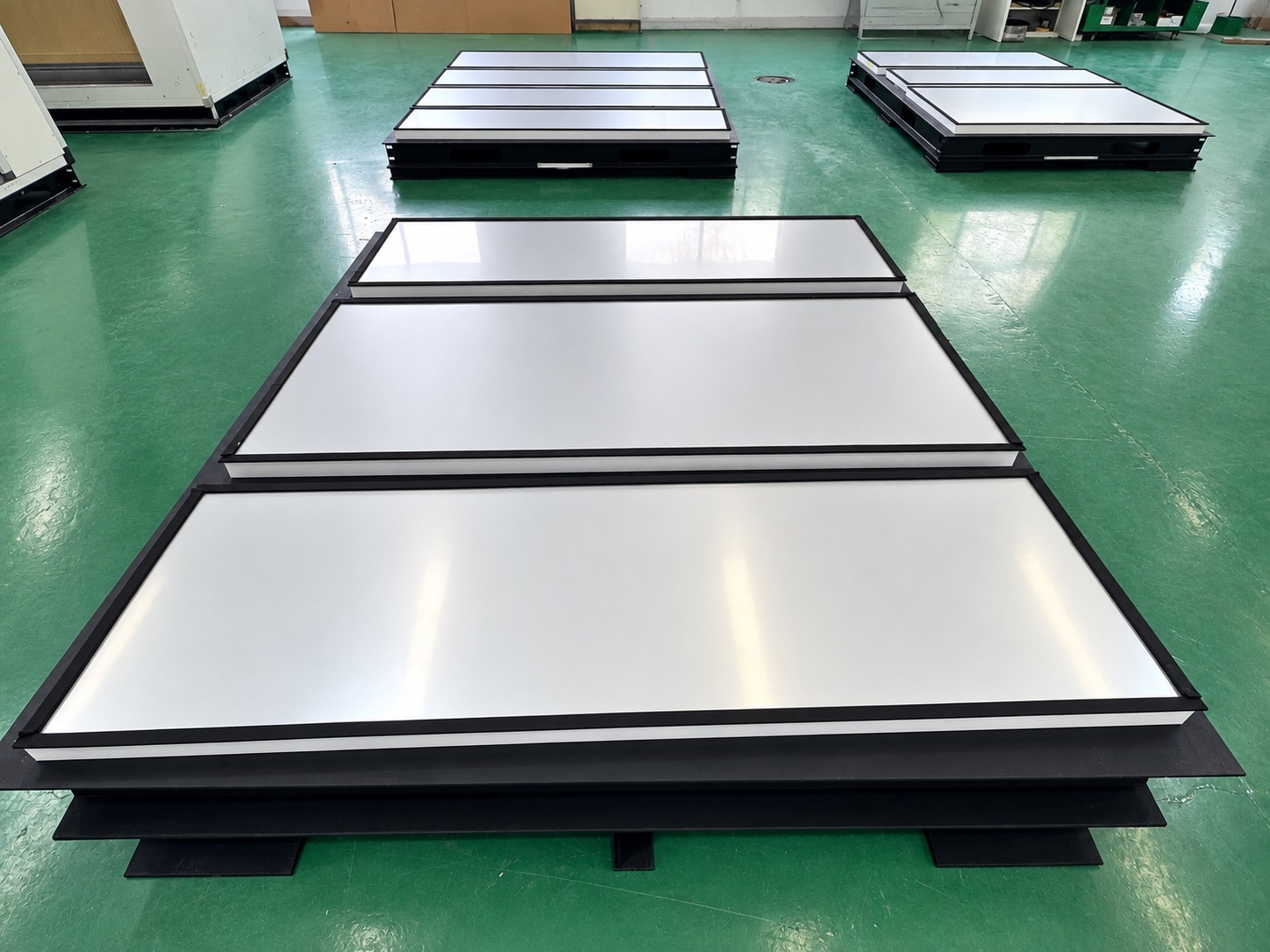
Customized PU Panel Engineering Overview
Customized PU panel is used when standard panel dimensions or surfaces cannot meet the project requirement. Customers may need special length, non-standard thickness, different metal surfaces, edge details, or panel compatibility with existing structures.
The quotation should define the panel function clearly: wall, ceiling, partition, floor, replacement panel, OEM stock, or special project part. Each use has different requirements for steel thickness, flatness, edge shape, and packing.
JiangNan supports customized PU panel production for cold room contractors, distributors, and end users. The factory can coordinate panels with doors, accessories, and full cold room systems when required.
Insulation Performance
PU insulation provides low thermal conductivity and is widely used in chiller and freezer rooms. Customization helps match site constraints without losing cold room performance.
Joint and Sealing
Customized edges must be checked carefully because non-standard connections can create air leakage if they are not matched with adjacent panels or frames.
Surface Selection
Surface selection should follow the real operating environment. Do not specify a decorative surface where impact, washing, salt, or forklift traffic is the main risk.
Export Handling
Panel length, stack height, protective film, forklift access, and container loading should be checked before production. This avoids damage during long-distance shipment.
Technical Specifications
| Panel Thickness | customized from 50 mm to 200 mm according to room temperature and structure |
|---|---|
| Steel Thickness | 0.4 to 1.0 mm depending on strength requirement |
| PU Density | 40 to 42 kg/m³ standard PU, other density by project confirmation |
| Thermal Conductivity | about 0.022 W/(m·K) for PU insulation |
| Fire Rating | standard PU fire performance by material specification; improved options available by project |
| Joint Type | cam lock, tongue-and-groove, special edge, or customized connection |
| Available Width | 960 mm, 1000 mm, or customized where production allows |
| Maximum Length | customized according to container, transport, and site handling |
| Surface Materials | color steel, stainless steel, embossed aluminum, galvanized steel, or special coating |
| Operating Temperature | -35C to +15C depending on thickness and room design |
| Main Use | custom cold rooms, special warehouses, processing rooms, OEM panel supply, and replacement panels |
| Export Packing | protective film, stacked packing, accessory labels, and container loading plan |
Related Customized PU Panel Projects
Czech Republic Frozen Storage
Temperature: -18C
Room size: 6 × 8 × 2.8 m
Panel thickness: 150 mm
Frozen storage using thicker insulation, freezer door sealing, and low-temperature refrigeration equipment.
Argentina Seafood Cold Room
Temperature: -25C
Room size: 8 × 10 × 3 m
Panel thickness: 150 mm
Seafood storage project focused on corrosion-resistant surfaces, stable pull-down, and careful packing for export.
Supermarket Cold Room
Temperature: 0C to 5C
Room size: 4 × 6 × 2.6 m
Panel thickness: 100 mm
Back-of-store chilled room for dairy, beverage, produce, and daily replenishment operation.
Pharmaceutical Cold Storage
Temperature: 2C to 8C
Room size: custom
Panel thickness: 100 mm
Temperature-stable room layout with controlled access, reliable sealing, and clear maintenance space.
Walk-in Freezer Project
Temperature: -18C
Room size: custom
Panel thickness: 120 to 150 mm
Small and medium freezer room reference for restaurants, distributors, and frozen food storage.
Request a Customized PU Panel Quotation
Send your room size, target temperature, stored product, daily loading, voltage, and destination country. JiangNan will provide a practical configuration suggestion and quotation within 24 hours.
Panel Thickness Selection Guide
The thickness guide below is a practical starting point for cold room quotation. Final selection should consider room size, ambient temperature, door opening frequency, stored goods, product entering temperature, equipment load, and local energy cost.
| Panel Thickness | Recommended Temperature Range |
|---|---|
| 50 mm | +10C to +15C service rooms, processing rooms, or areas with low temperature difference |
| 75 mm | 0C to +10C chilled rooms, fruit rooms, dairy rooms, and beverage rooms |
| 100 mm | -18C to 0C medium-temperature storage or energy-saving chilled rooms |
| 150 mm | -35C to -18C freezer rooms, seafood storage, meat storage, and high ambient sites |
| 200 mm | below -35C or special low-temperature projects after engineering confirmation |
For replacement projects, measure existing panel thickness, effective width, edge profile, and lock position before ordering customized panels.
Applications
Seafood Cold Storage
Requires low-temperature insulation, corrosion-aware surfaces, and careful panel sealing around doors and floor joints.
Meat Processing
Needs hygienic surfaces, impact protection, reliable corner connection, and thickness selected for chilled or frozen operation.
Dairy Storage
Usually uses chilled temperature, easy-clean surface, stable panel joints, and good door sealing for frequent access.
Vegetable Storage
Requires correct temperature range, airflow planning, and surface material that can handle humidity and cleaning.
Pharmaceutical Cold Room
Requires stable insulation, controlled access, clean inner surface, and reliable room envelope performance.
Logistics Warehouse
Needs stronger surface options, long panels where suitable, and careful coordination with sliding doors and dock areas.
Manufacturing, Packaging, and Loading Details
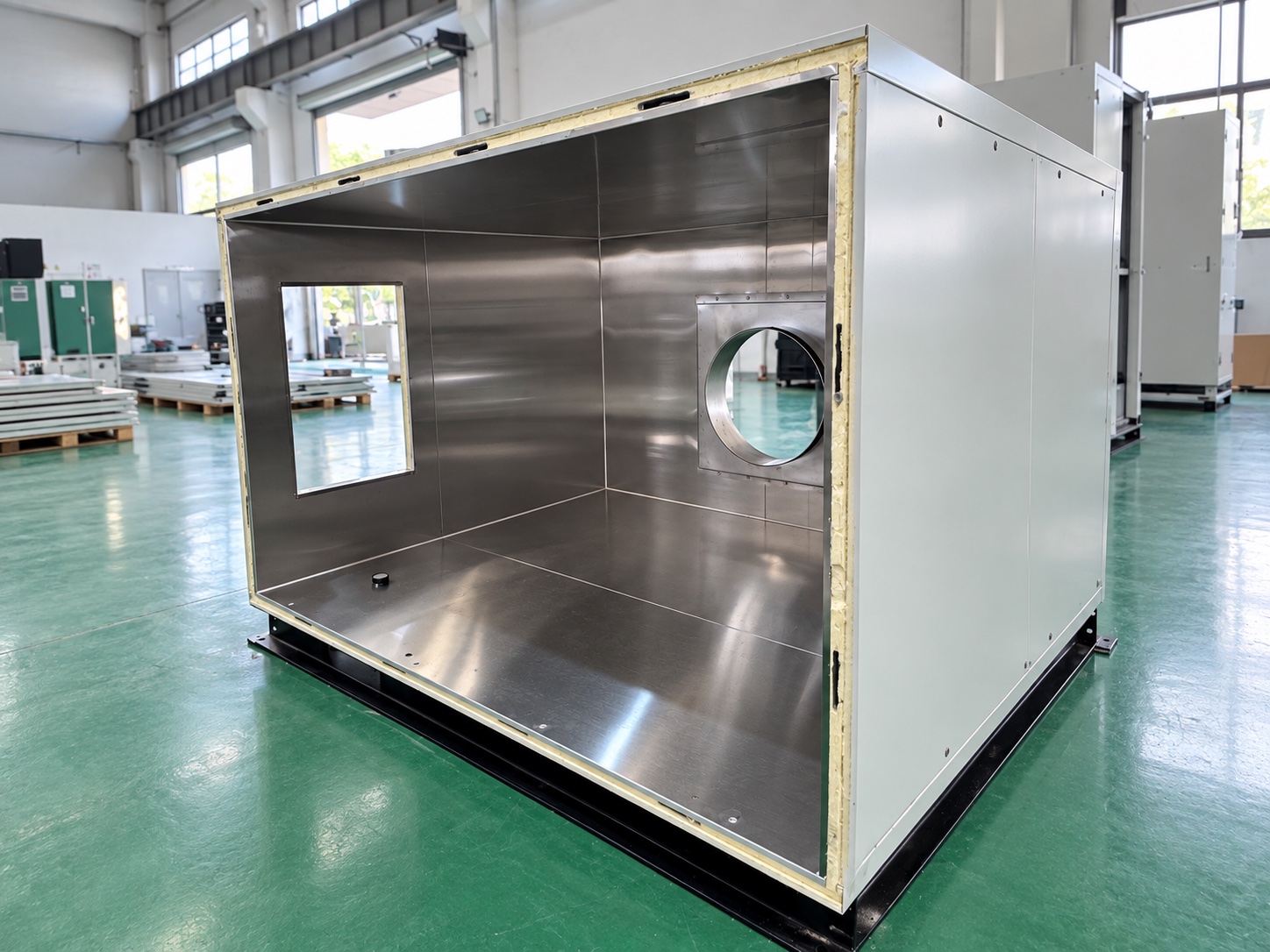
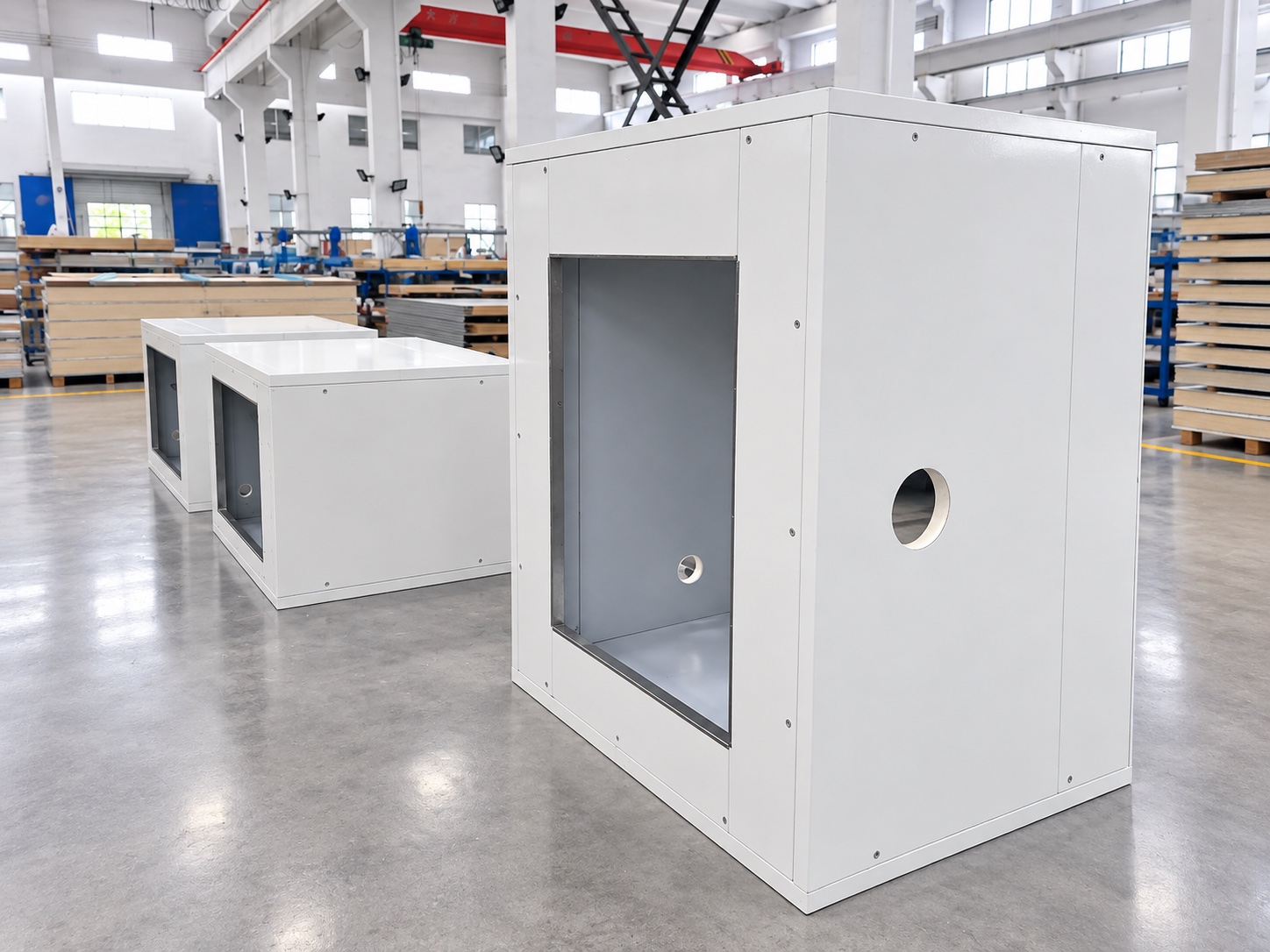
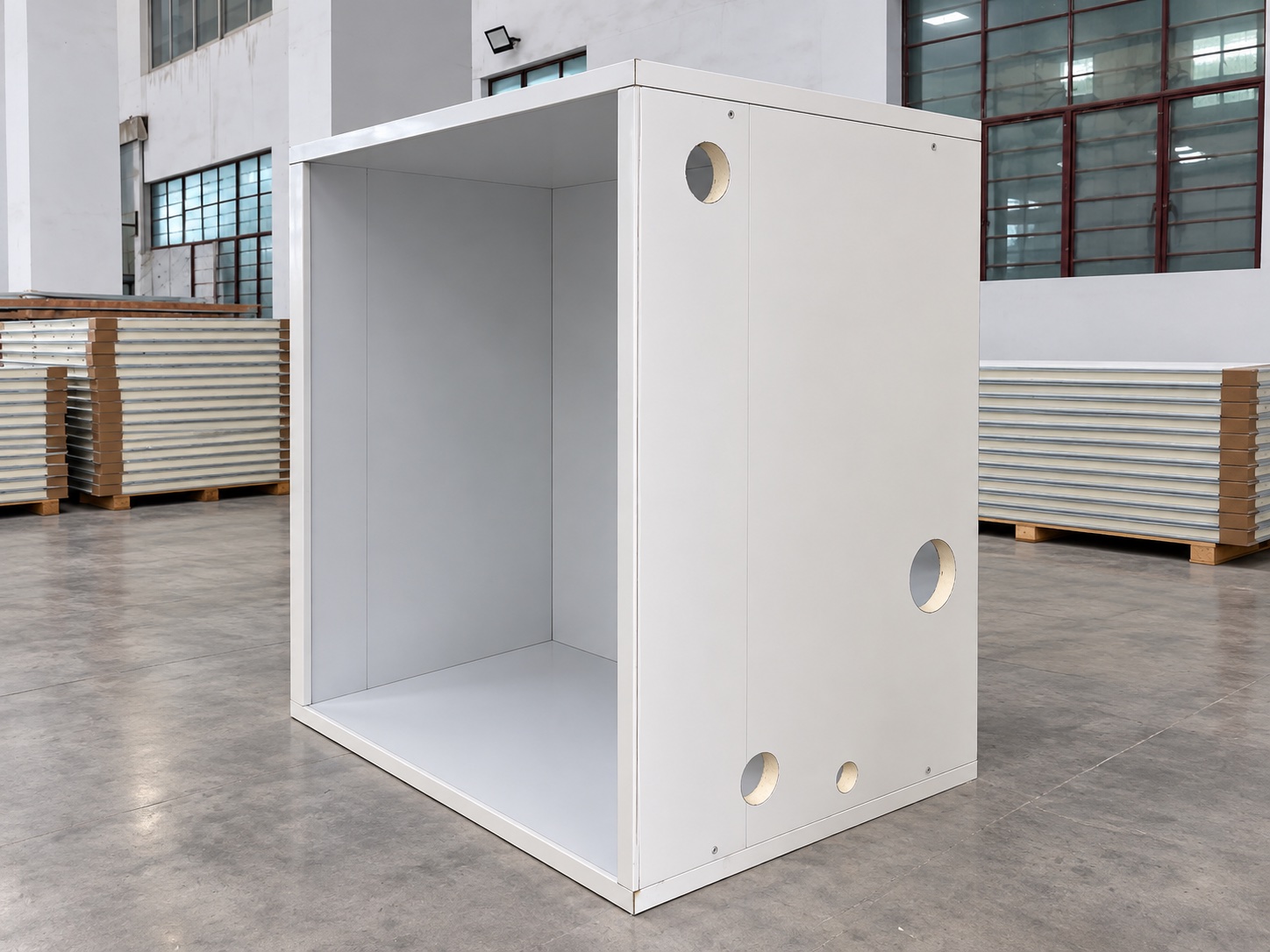
JiangNan checks panel production, surface material, joint forming, core bonding, trimming, labeling, packing, and container loading as one workflow. For export customers, this is important because damaged panels, missing accessories, or unclear labels can delay site installation.
Production Control
Customized production needs confirmed drawings, dimensions, surface material, lock position, edge design, quantity, and packing method. Small changes can affect tooling and lead time.
Packaging Control
Panels should be stacked by type and length, protected from surface scratches, and loaded according to container balance. Doors, accessories, corner parts, sealant, and small hardware should be packed separately with labels for site checking.
How to Choose the Right Customized PU Panel
1. Start with temperature and goods type
Start with the room temperature and whether the panel is used for wall, ceiling, floor, partition, or replacement. The same thickness may not be suitable for every position.
2. Confirm surface material and steel thickness
Confirm steel thickness and surface material from usage. A clean room wall, seafood room, and forklift warehouse have different durability needs.
3. Check joint type, panel width, and maximum length
Measure effective width, total length, edge profile, and lock location carefully. For replacement panels, do not rely only on nominal thickness.
4. Match panels with doors and refrigeration layout
Door frames, refrigeration pipes, lighting, and accessories should be coordinated with customized panel openings or reinforcements.
5. Review packing and installation before production
Customized panels should be packed in a sequence that matches site installation. Labeling is especially important when dimensions vary by position.
Why JiangNan
Established in 1997
JiangNan has long-term manufacturing experience in insulated panels, cold room doors, refrigeration components, and complete cold room projects. This helps the quotation team check panel thickness, door type, refrigeration capacity, packing volume, and installation details together instead of treating each item separately.
20,000 m² Manufacturing Facility
The factory supports panel production, door assembly, hardware preparation, trial fitting, packing, and container loading. For export orders, drawings, material lists, and packing plans are checked before shipment to reduce missing parts and installation delay at site.
150+ Employees
Production, technical, sales, and after-sales teams work together on room layout, panel cutting, door opening, refrigeration matching, and accessories. Practical factory communication is important when the customer only has room size, product type, target temperature, and destination country at quotation stage.
OEM, ODM, and Export Support
OEM and ODM cooperation is available for distributors and contractors. JiangNan can provide complete cold room solutions, including panels, doors, air coolers, condensing units, accessories, packing lists, and installation guidance for overseas projects.
Related Products and Articles
Cold Room Panel
PU or PIR insulated panels with cam lock joint for chiller, freezer, and warehouse construction.
Cold Room Sliding Door
Manual sliding door selection for low-temperature and high-traffic cold rooms.
Electric Sliding Door
Motorized sliding door for frequent forklift traffic and logistics warehouses.
Ceiling Type Air Cooler
Air cooler selection for compact cold rooms and standard storage areas.
Cold Storage Warehouse Guide
Warehouse layout, insulation, door, dock, refrigeration, and energy design guidance.
Cold Room Temperature Guide
Temperature ranges for food, seafood, meat, vegetables, dairy, and pharmaceutical storage.
FAQ
What information is needed to quote Customized PU Panel?
Please send the country, required temperature, room size or panel quantity, panel thickness, steel thickness, surface material, joint type, maximum panel length, and whether accessories or doors are needed. These details allow JiangNan to check production feasibility, packing volume, and container loading.
How should the panel thickness be selected?
Customized PU panels should be selected by temperature first, then adjusted for surface, strength, length, and installation method. Thickness should also consider ambient temperature, door opening frequency, installation location, and long-term energy cost.
What steel thickness is available?
Common steel thickness is 0.4 mm to 0.8 mm, with thicker steel available for stronger impact resistance. Stainless steel, color steel, embossed aluminum, or other surfaces can be selected according to cleaning, corrosion, and traffic conditions.
What is the normal PU or insulation density?
Standard cold room PU density is usually 40 to 42 kg/m³; special density can be discussed when strength or project specification requires it. Density and core quality should be confirmed with the final quotation because insulation performance and panel strength both affect cold room operation.
Can panel length be customized?
Yes. Panel length can be customized according to room height, ceiling span, container loading, and site handling ability. Very long panels reduce joints but are harder to unload and install, so shipping and installation should be checked together.
What joint type is recommended?
Cam lock joints suit modular cold rooms, while customized edges may be needed for replacement, special structures, or OEM systems. The joint must provide tight connection, easy installation, and reliable sealing after the room is in operation.
Can JiangNan provide panel layout drawings?
Yes. For cold room projects, JiangNan can prepare layout suggestions showing wall panels, ceiling panels, corners, door openings, and accessories. This helps the customer count materials and guide installers at site.
How are panels protected for export?
Panels are protected with film, stacked according to thickness and length, and packed for container loading. Small accessories, locks, sealant, hardware, and installation materials should be packed with clear labels and checked before shipment.
Which surface material is best for food cold storage?
Choose stainless steel or stronger coating for wet, salty, or cleaning-heavy environments; color steel is suitable for many standard rooms. The choice depends on stored goods, cleaning method, humidity, salt, chemical exposure, and impact risk.
Does this product work with JiangNan cold room doors?
Yes. The panel thickness and joint design can be matched with hinged doors, sliding doors, electric sliding doors, and special door frames. Door opening dimensions should be confirmed before panel production.