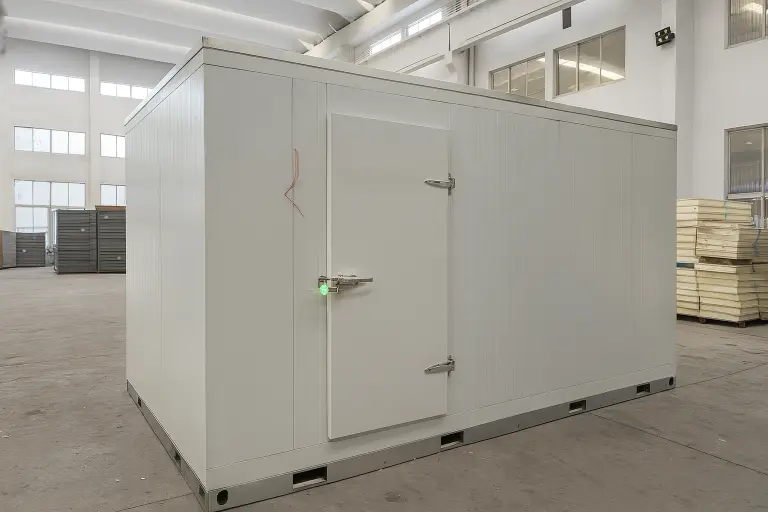
Why More Businesses Are Choosing Mobile Cold Rooms
Traditional cold rooms can provide stable refrigeration environments, but in real projects there is often a major challenge: installation complexity and high labor costs.
Building a traditional cold storage room usually requires several technical steps, including:
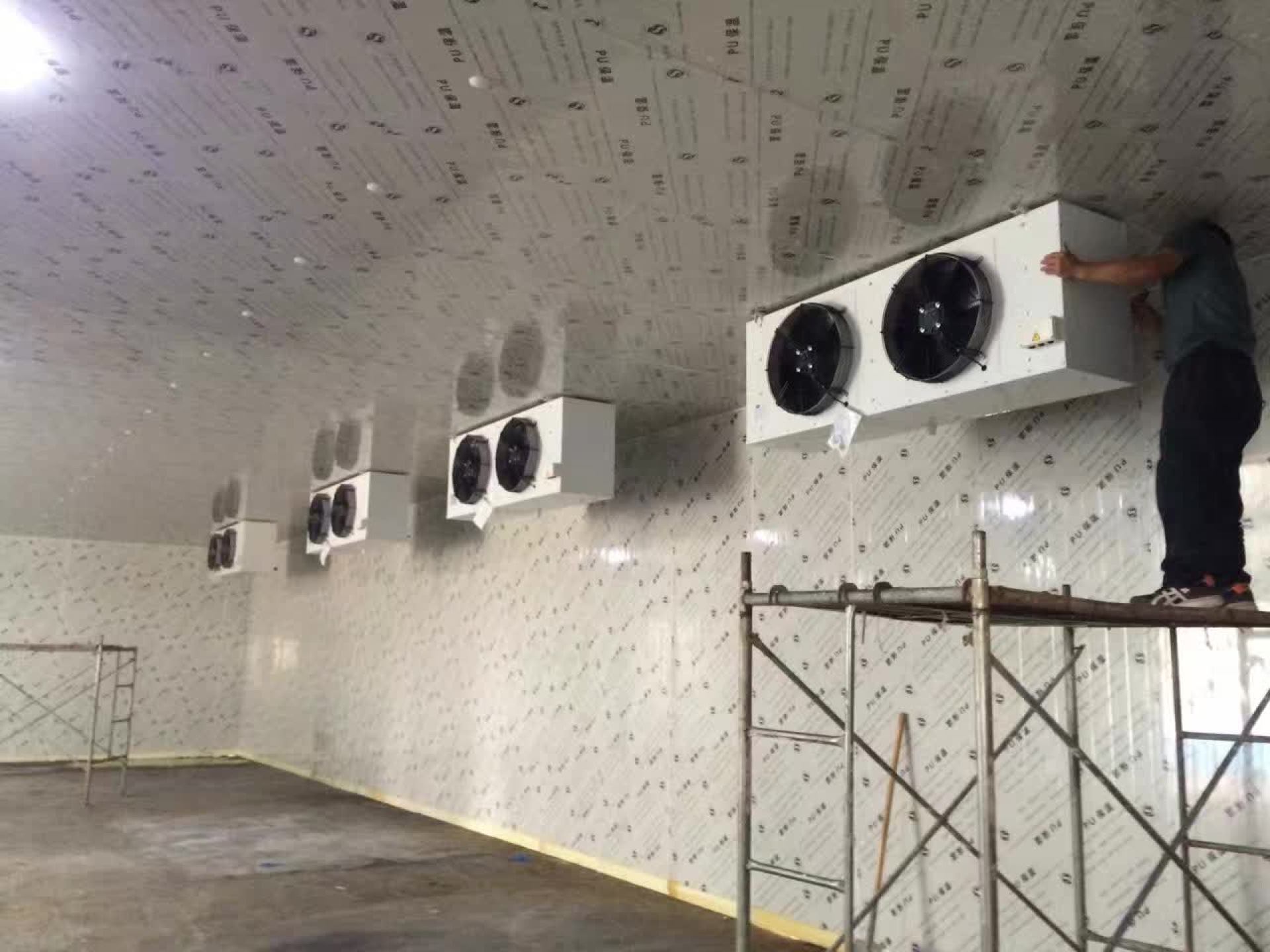
- assembling the cold room structure on site
- installing the refrigeration unit
- welding refrigeration copper pipes
- vacuuming the refrigeration system
- charging refrigerant
- performing system commissioning
All these tasks must be completed by professional refrigeration engineers. In many countries, the labor cost of refrigeration technicians is very high, and it is not always easy to find qualified professionals quickly.
For many overseas customers, this becomes a major obstacle when purchasing cold storage equipment.
A mobile cold room is designed to solve this problem. It provides the same insulation and refrigeration performance as traditional cold rooms, but with significant advantages such as easy installation, flexible transportation, and no need for professional installation engineers.
Because of these advantages, mobile cold rooms are increasingly used in industries such as seafood processing, agriculture cold chain, food distribution, and temporary refrigeration applications.
The Biggest Advantage of Mobile Cold Rooms: Easy Installation
One of the biggest differences between a mobile cold room and a traditional cold room is the installation method.
Traditional cold storage systems require on-site installation of refrigeration components, while mobile cold rooms allow most of the system assembly to be completed in the factory.
Many modern mobile cold rooms use monoblock refrigeration units, where the compressor, condenser, evaporator, and control system are integrated into a single compact system.
This design provides a major benefit:
The user does not need to install complex refrigeration piping on site.
Installation typically requires only a few simple steps:
- Place the monoblock refrigeration unit into the reserved opening in the cold room panel
- Secure the unit
- Connect the power supply
After these steps are completed, the cold room can start operating immediately.
There is no need for copper pipe welding, vacuum pumping, or refrigerant charging.
Even without professional refrigeration technicians, customers can easily complete the installation.
Plug and Play Refrigeration Design
To further simplify the installation process, many mobile cold rooms adopt a plug-and-play refrigeration system.
Before leaving the factory, the manufacturer has already completed:
- refrigeration system installation
- refrigerant charging
- system testing
- performance inspection
Once the equipment arrives at the customer’s site, the only requirement is to connect the power supply.
The cold room can then start running immediately.
This plug-and-play design is especially important for international customers, because it eliminates the need to search for local refrigeration engineers.
In many regions, qualified technicians may be difficult to find or expensive to hire. A mobile cold room allows businesses to deploy refrigeration capacity quickly without relying on local installation services.
Factory Pre-Installed Cold Room System
In addition to using monoblock refrigeration units, some mobile cold rooms can also be fully pre-assembled in the factory.
In this solution, both the cold room structure and refrigeration system are installed and tested before shipment.
The complete system typically includes:
- insulated cold room panels
- refrigeration unit
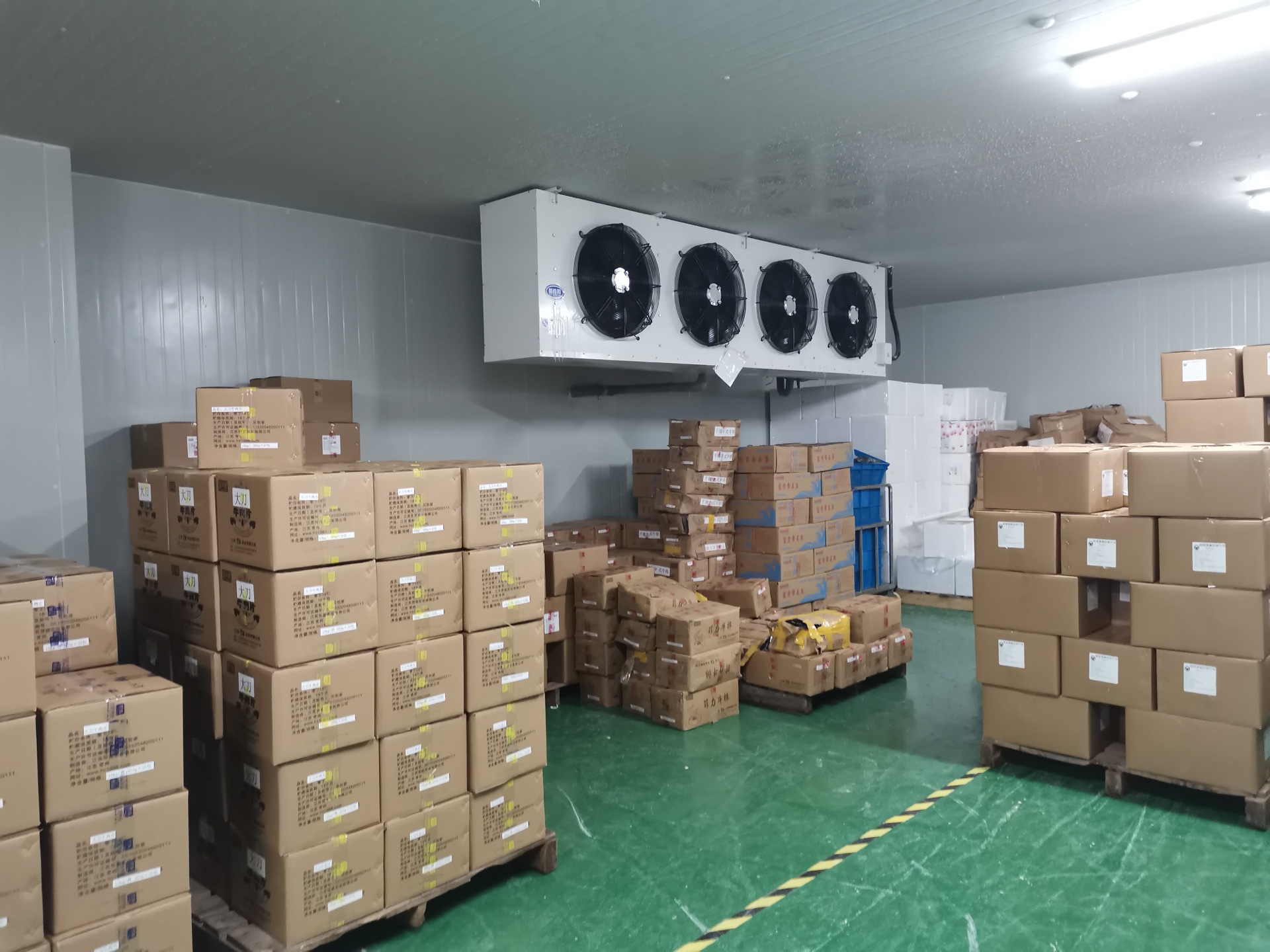
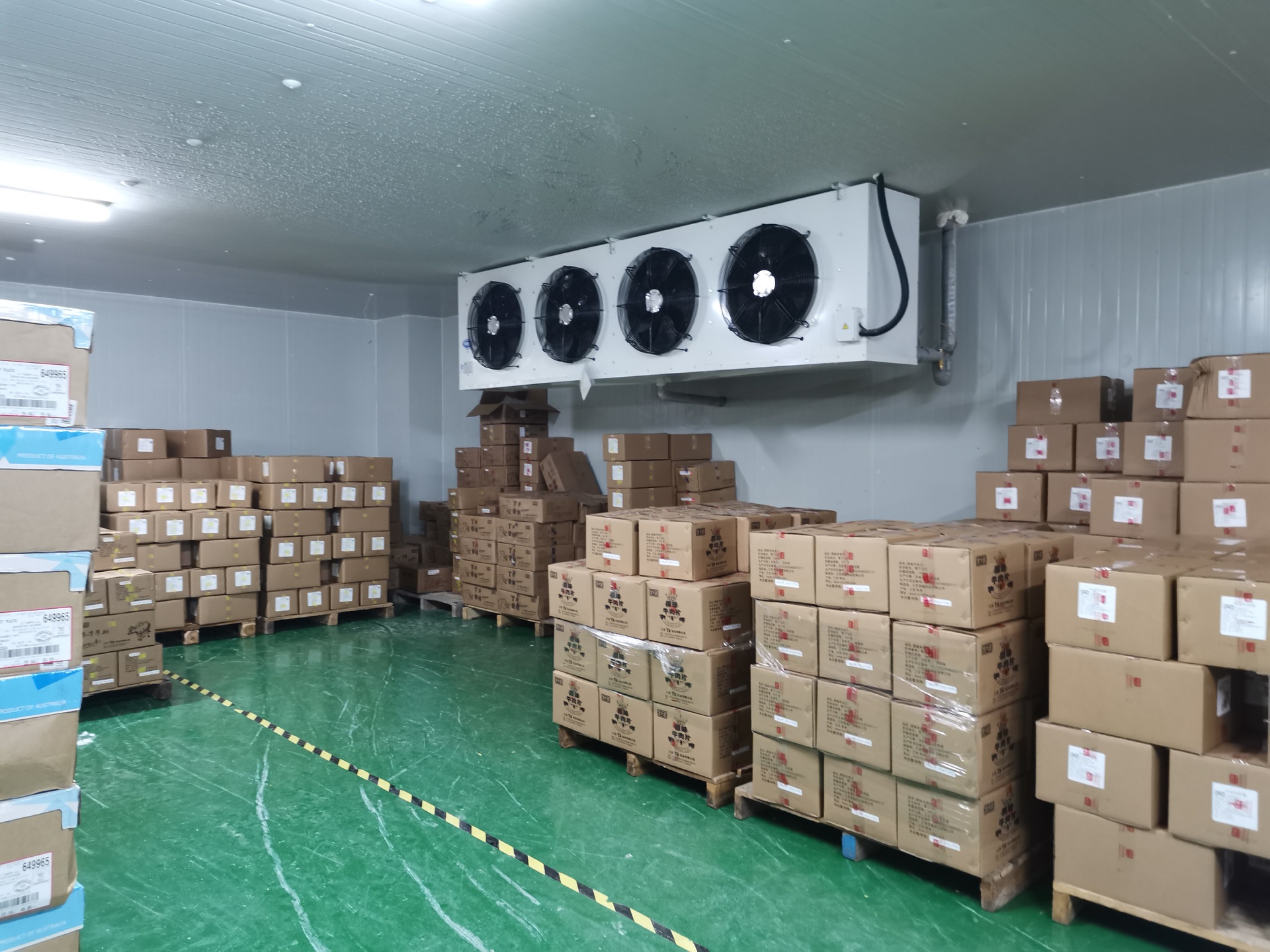
- evaporator air cooler
- electrical control system
After delivery, the customer only needs to:
- place the cold room in the desired location
- connect the electrical power supply
The cold room can then operate immediately.
This factory pre-installation significantly reduces on-site work while ensuring that the refrigeration system has been fully tested under controlled conditions before delivery.
Structure of a Mobile Cold Room
Although mobile cold rooms are easier to install, their basic structure is similar to traditional cold rooms. They still include complete insulation and refrigeration systems.
Insulated Cold Room Panels
Most mobile cold rooms use polyurethane insulated sandwich panels.
Polyurethane insulation offers excellent thermal performance, helping reduce heat transfer and energy consumption.
Common panel thickness options include:
100 mm for chilled storage
120 mm for low-temperature storage
150 mm for freezer rooms
This structure ensures both strong insulation performance and sufficient mechanical strength.
Refrigeration System
The refrigeration system of a mobile cold room typically includes:
- compressor unit
- condenser
- evaporator air cooler
- expansion valve
- electrical control system
Different refrigeration capacities can be selected according to the required storage temperature and room size.
Cold Room Doors
Cold room doors are usually available as hinged doors or sliding doors.
The door panels are insulated with polyurethane foam and equipped with magnetic sealing gaskets to prevent cold air leakage.
For freezer applications, electric heating wires in the door frame can also be installed to prevent frost formation.
Applications of Mobile Cold Rooms
Thanks to their simple installation and flexible deployment, mobile cold rooms are widely used in many industries.
Seafood and Fisheries
Seafood products require rapid cooling immediately after harvesting.
Mobile cold rooms can be placed directly at fishing ports or seafood processing sites.
Agricultural Storage
Large quantities of fruits and vegetables require temporary cold storage during harvest seasons.
Mobile cold rooms can serve as temporary agricultural cold storage facilities.
Food Processing Industry
Food processing companies often need additional refrigeration capacity during peak production periods.
Mobile cold rooms provide a convenient solution for expanding cold storage capacity.
Catering and Events
Large catering events, exhibitions, or outdoor activities require temporary refrigeration.
Mobile cold rooms can provide reliable cold storage for food and beverages.
Future Trends of Mobile Cold Rooms
With the continuous growth of global cold chain logistics, mobile cold rooms will become increasingly important.
Future developments may include:
- more energy-efficient refrigeration systems
- smart temperature monitoring systems
- modular cold room structures
- easier transportation and mobility solutions
These innovations will further improve the efficiency and usability of mobile cold storage systems.
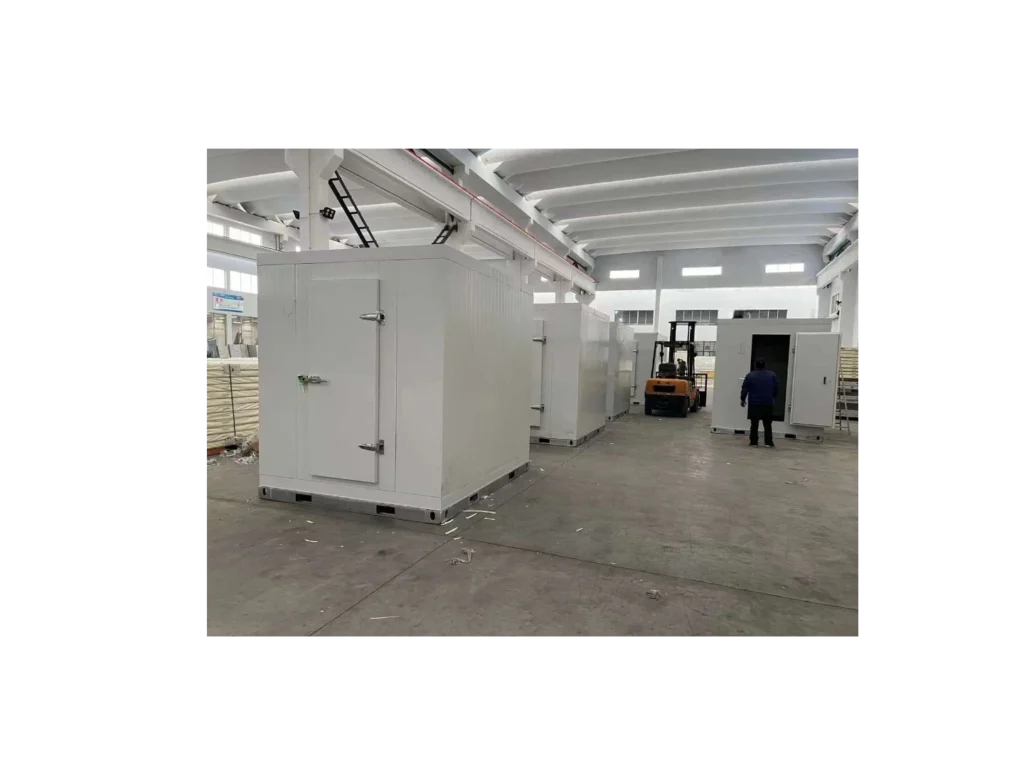
Frequently Asked Questions (FAQ) About Mobile Cold Rooms
What is a mobile cold room?
A mobile cold room is a portable cold storage unit designed to provide refrigeration or freezing wherever it is needed. Unlike traditional cold rooms, mobile cold rooms can be transported easily and installed quickly. Many modern mobile cold rooms use plug-and-play refrigeration systems that allow users to start operating the unit immediately after connecting the power supply.
Do mobile cold rooms require professional installation?
Most modern mobile cold rooms do not require professional refrigeration engineers for installation. With monoblock refrigeration units or factory pre-installed systems, customers only need to connect the power supply. The refrigeration system is already assembled and tested in the factory, which eliminates complex installation work on site.
How does a plug-and-play mobile cold room work?
A plug-and-play mobile cold room integrates the compressor, condenser, evaporator, and control system into one compact unit. The refrigeration system is pre-installed and charged with refrigerant at the factory. After delivery, users simply install the unit on the cold room wall or receive the fully assembled system and connect the electrical power to start operation.
What temperature range can a mobile cold room achieve?
Mobile cold rooms can operate across a wide temperature range depending on the refrigeration system and insulation thickness. Typical operating temperatures include:
0°C to +5°C for chilled storage
-5°C to 0°C for fresh food storage
-18°C for frozen food storage
-25°C or lower for deep freezing applications
What insulation materials are used in mobile cold rooms?
Most mobile cold rooms use polyurethane insulated sandwich panels. Polyurethane insulation provides excellent thermal performance and structural strength. Common panel thicknesses include 100 mm, 120 mm, and 150 mm depending on the required storage temperature.
Can the refrigeration system be pre-installed in the factory?
Yes. Many manufacturers offer factory pre-installed cold room systems. In this design, the cold room panels, refrigeration unit, evaporator, and control system are assembled and tested before shipment. When the unit arrives on site, customers only need to connect the electrical power supply to start using the cold room.
What industries use mobile cold rooms?
Mobile cold rooms are widely used in industries such as seafood processing, agriculture, food distribution, pharmaceutical logistics, and catering services. They are especially useful in situations where temporary refrigeration or flexible cold storage is required.
How long does it take to install a mobile cold room?
Installation time is usually very short because most systems are pre-assembled in the factory. For plug-and-play systems, installation may only take a few hours before the cold room is ready to operate.
Can mobile cold rooms be transported easily?
Yes. Mobile cold rooms can be mounted on trailers, trucks, or movable steel platforms. This allows them to be transported easily between different locations such as farms, fishing ports, warehouses, or event sites.
Can mobile cold rooms be customized?
Yes. Mobile cold rooms can be customized according to customer requirements. Manufacturers can adjust the room size, temperature range, insulation thickness, refrigeration system capacity, and door type to meet specific application needs.