Modular Cold Room: A Practical Guide for B2B Cold Storage Projects
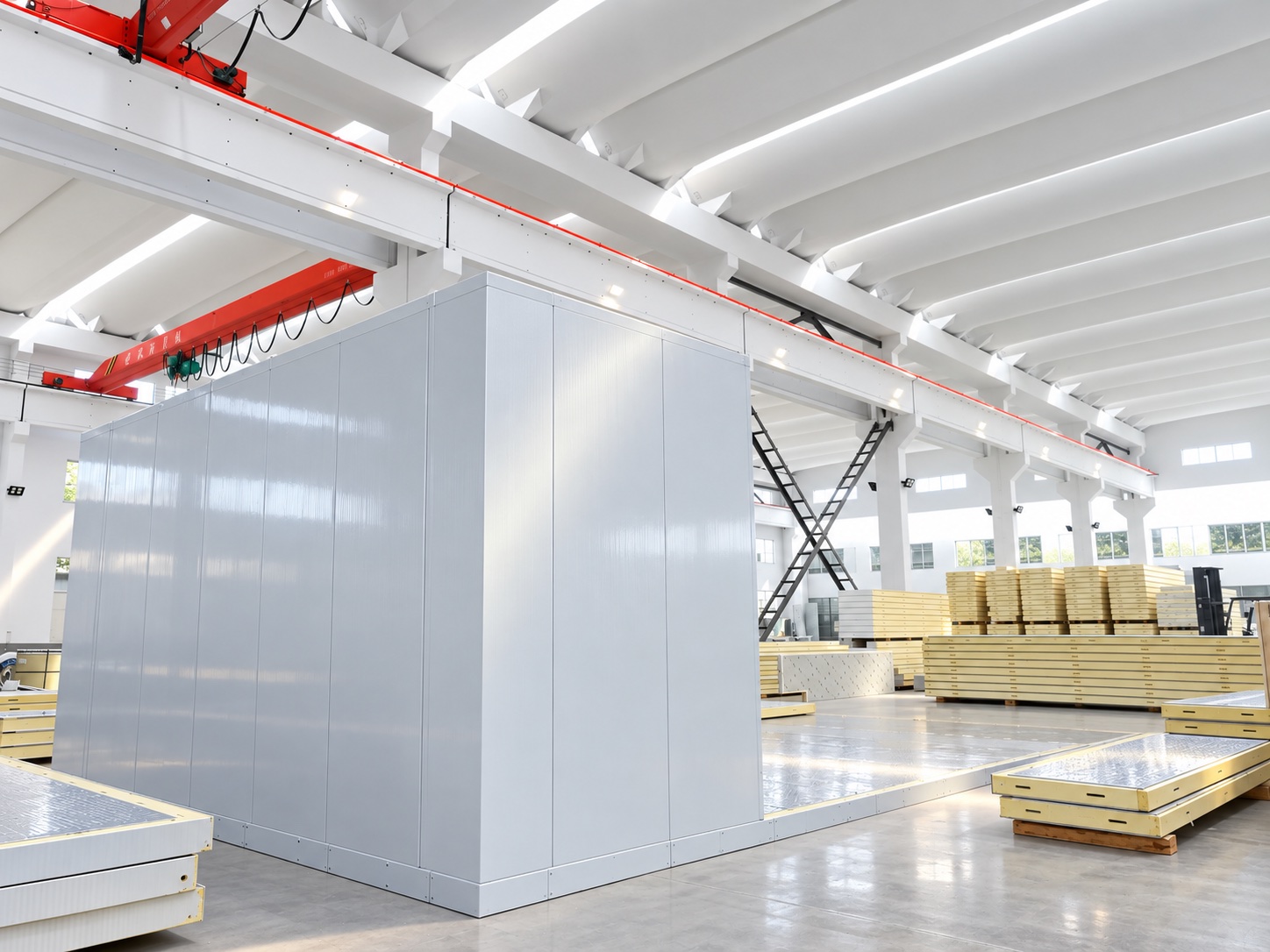
A modular cold room is a prefabricated cold storage room built from insulated panels, cold room doors, and matched refrigeration equipment. Instead of constructing the room wall by wall on site, the main components are produced in a factory, packed for transport, and assembled at the project location. For food distributors, processors, supermarkets, farms, seafood companies, and cold chain contractors, this approach can reduce installation time and make project planning more predictable.
In real projects, buyers rarely ask for a cold room as a single product. They usually need a working storage system: panels that fit the building, doors that match the traffic flow, refrigeration equipment sized for the product load, and installation details that avoid air leakage or condensation. This is where modular construction becomes useful. It gives the buyer a repeatable structure while still allowing custom dimensions and different temperature ranges.
JiangNan manufactures cold room panels, doors, and related refrigeration solutions for export projects. Many customers come to us after comparing local construction, sandwich panel installation, and imported modular cold rooms. The right choice depends on site conditions, labor cost, climate, loading frequency, and the level of temperature control required.
What Is a Modular Cold Room?
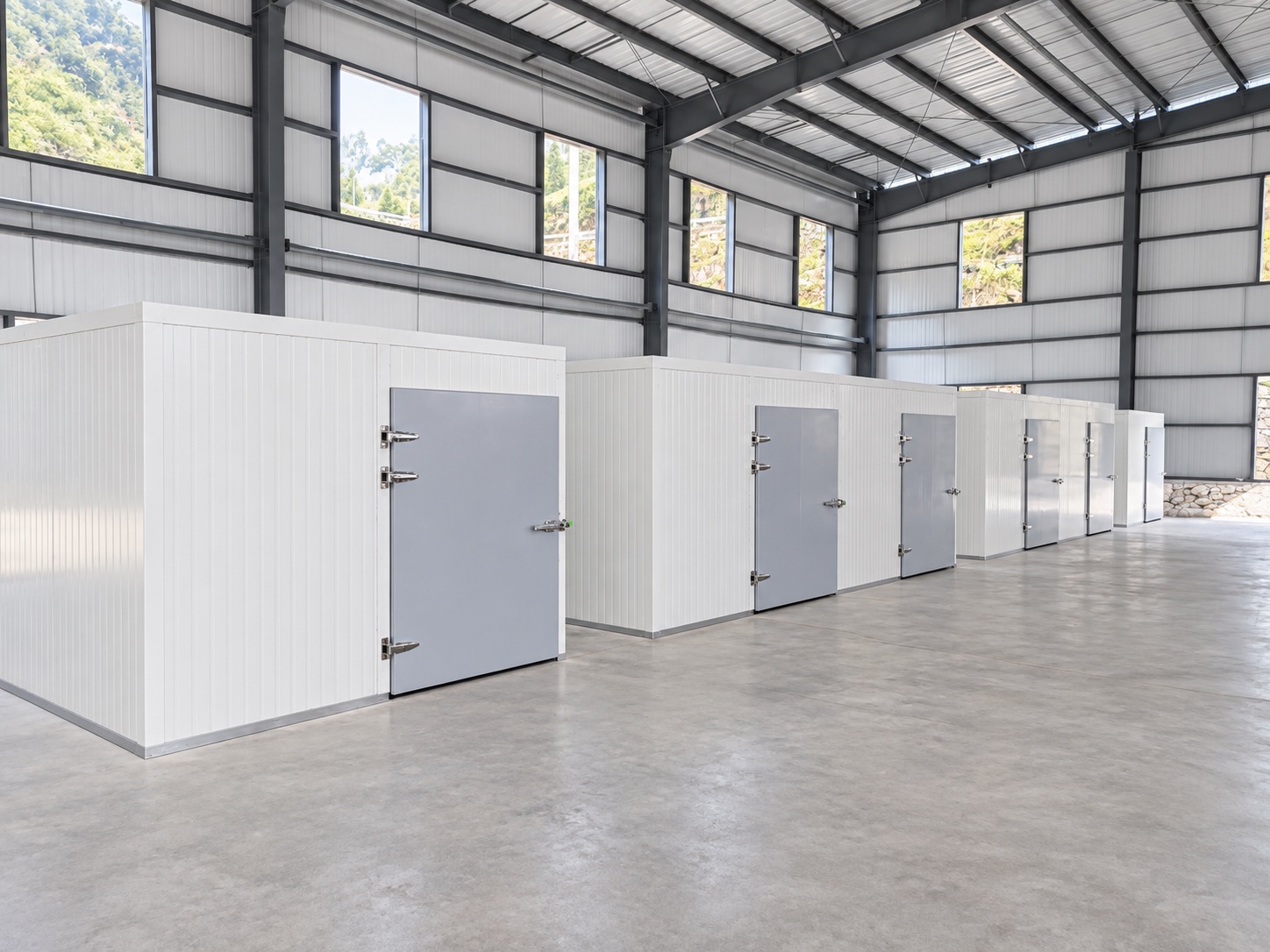
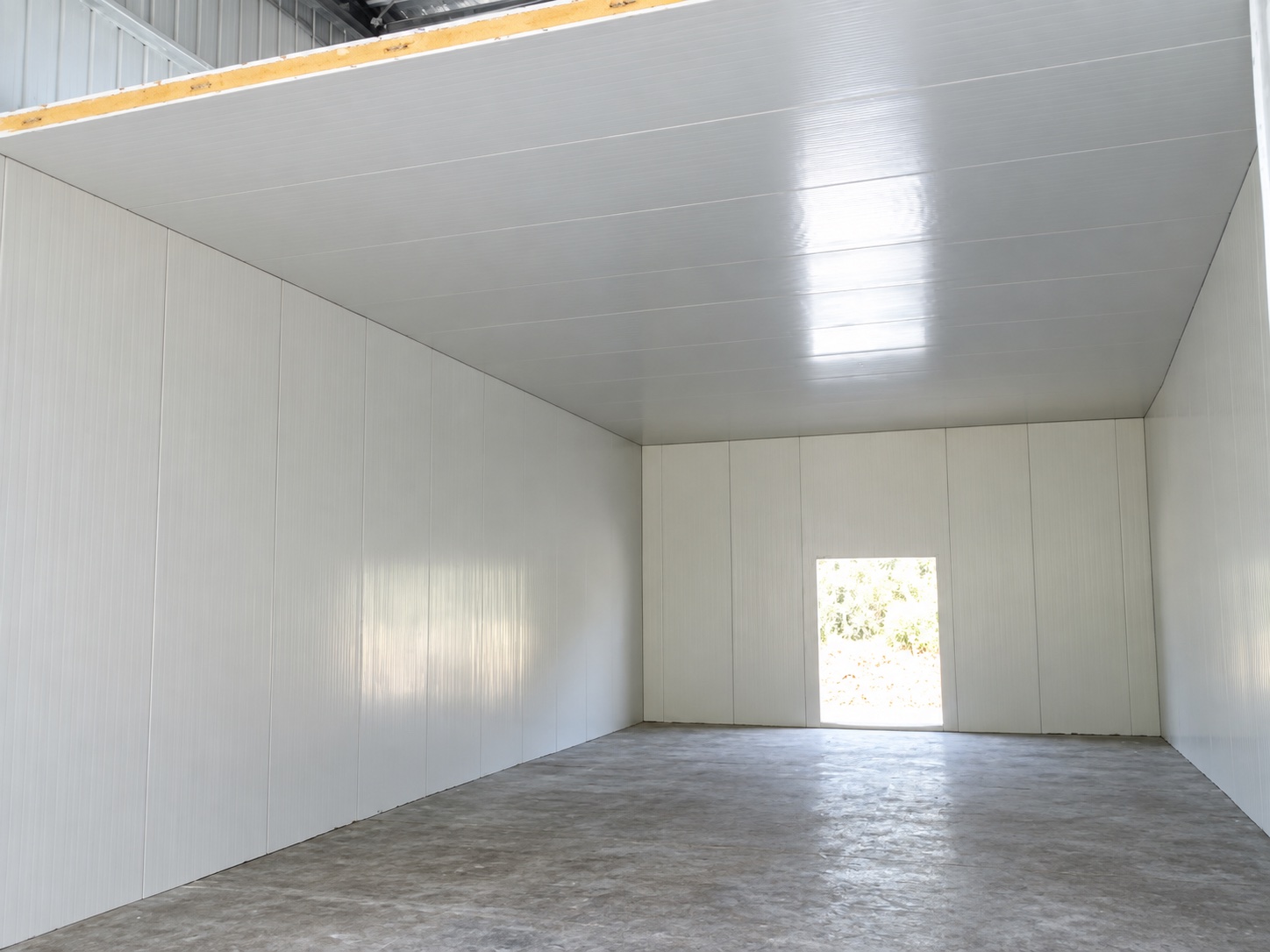
A modular cold room is made from factory-produced insulated panels that connect together on site. The panels are normally used for walls and ceilings, while the floor may be insulated panel, reinforced concrete with insulation, or an existing warehouse floor depending on the project. The room is completed with a hinged or sliding cold room door and a refrigeration system suitable for chiller, freezer, or low-temperature storage.
Most modular cold rooms use sandwich panels. These panels have metal skins on both sides and an insulation core inside. You can read a general explanation of sandwich panel construction on Wikipedia. In cold storage projects, the panel thickness and insulation material must be selected according to the target temperature and working conditions.
For small and medium rooms, modular panels may use cam-lock connections. A cam-lock cold room panel allows panels to be pulled tightly together during installation, helping improve air tightness and alignment. For larger warehouses, tongue-and-groove or other joint systems may also be used, often with additional sealing and structural support.
Why B2B Buyers Choose Modular Cold Rooms
The first reason is speed. A modular cold room can be assembled faster than a fully site-built room because the panels are already manufactured to size. This matters for supermarkets, restaurants, food factories, and distributors that cannot keep products waiting while construction continues.
The second reason is consistency. Factory prefabrication helps control panel dimensions, steel skin quality, insulation density, and door preparation. When panels are cut and checked before shipment, the installer has fewer surprises on site.
The third reason is flexibility. A modular cold room can be designed for fruit storage, frozen meat, seafood, dairy, pharmaceuticals, or processing areas. The size, door type, panel thickness, and refrigeration unit can be adjusted according to the project. This is different from buying a standard containerized unit where internal dimensions are fixed.
For export buyers, modular cold rooms also help with container loading. Panels can be stacked and protected for sea freight. Doors, accessories, aluminum profiles, sealants, and refrigeration equipment can be packed together when the project scope requires it. Proper packing reduces the risk of edge damage, panel scratches, and missing installation parts.
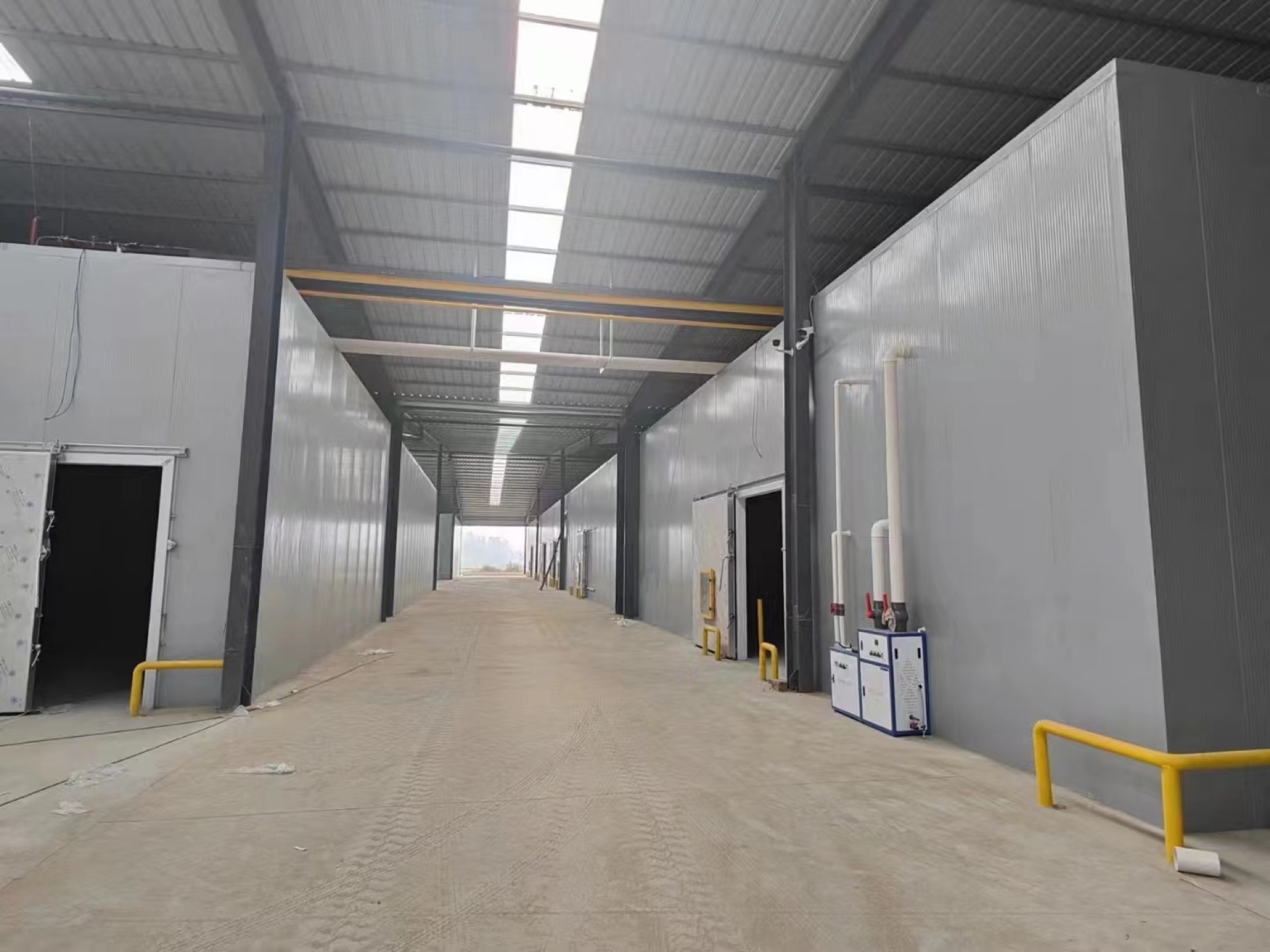
Modular Cold Room vs Traditional Cold Room Construction
| Item | Modular Cold Room | Traditional Site-Built Cold Room |
|---|---|---|
| Production | Factory-prefabricated panels and components | More work completed on site |
| Installation | Fast assembly with prepared panels | Longer site construction time |
| Quality Control | Panel dimensions and parts checked before shipment | Quality depends heavily on site labor |
| Export Projects | Easier to pack and ship as a complete system | May require local sourcing of many parts |
| Customization | Custom dimensions, doors, thickness, and temperature range | High flexibility but harder to standardize |
Traditional construction can still be suitable for very large warehouses or special building structures. However, for many commercial and industrial projects, modular cold rooms offer a practical balance of customization, cost control, and installation speed.
Main Components of a Modular Cold Room
Cold Room Panels
Cold room panels are the body of the room. The panel thickness is usually selected based on temperature. Chiller rooms often use thinner panels than freezer rooms. For tropical regions, such as Southeast Asia or the Middle East, buyers often choose thicker panels even for standard freezer rooms because the ambient temperature is high and heat gain is greater.
Common customer mistakes include choosing panels only by price, using chiller panels for freezer rooms, and ignoring ceiling span. In busy food distribution projects, saving a small amount on panel thickness can lead to higher energy consumption and unstable temperature later.
Cold Room Doors
The door is one of the most important parts of a modular cold room. A good insulated room will still lose energy if the door is not suitable. Hinged doors are common for small rooms. Sliding doors are often used where trolleys, forklifts, or frequent loading are involved. For freezer rooms, heaters, gaskets, and proper sealing details must be checked.
You can review our related cold room sliding door and cold room panel pages for product examples.
Refrigeration System
The refrigeration system should be selected after confirming room size, target temperature, product load, door opening frequency, and ambient conditions. A chiller for fresh vegetables is not designed the same way as a freezer for seafood. For information about refrigeration principles, see the general overview of refrigeration.
Installation Details That Affect Performance
Good installation is not only about making the panels stand upright. Installers must check panel alignment, joint sealing, ceiling support, floor connection, door frame sealing, drainage, and electrical routing. Small gaps can create condensation, frost, or temperature loss. In freezer rooms, poor sealing around doors and panel joints can become a long-term maintenance problem.
For export projects, installation drawings and packing lists are important. Contractors should confirm panel numbering before unloading. If panels are stacked in the wrong order or stored outdoors without protection, the site team may lose time before assembly begins.
Applications for Modular Cold Rooms
Modular cold rooms are widely used for fresh food, meat, seafood, dairy, flowers, pharmaceuticals, and distribution warehouses. A fruit distributor may need a chiller room with humidity control and good air circulation. A seafood processor may need a freezer room with thicker panels and strong door sealing. A small supermarket may need several rooms with different temperatures behind the sales area.
In Europe and Australia, buyers often pay close attention to energy cost, fire performance, documentation, and clean installation. In the Middle East, high ambient temperature and heavy-duty operation are common concerns. In island or remote projects, spare parts, container loading, and installation guidance become more important.
Common Mistakes When Buying a Modular Cold Room
- Choosing panel thickness without considering local ambient temperature.
- Forgetting door opening frequency when sizing the refrigeration unit.
- Using a standard door where forklift traffic requires a stronger sliding door.
- Ignoring container loading plans for export shipments.
- Buying panels, doors, and refrigeration equipment from unrelated suppliers without checking compatibility.
Image Suggestions
| Image File Name | Alt Text | Where to Insert | Purpose |
|---|---|---|---|
| modular-cold-room-panel-installation.jpg | modular cold room panel installation with cam-lock connection | After What Is a Modular Cold Room | Show how panels are assembled on site |
| prefabricated-cold-room-panels-container-loading.jpg | prefabricated cold room panels packed for export container loading | After export project section | Support manufacturer export credibility |
| cold-room-sliding-door-freezer-project.jpg | insulated sliding door for modular freezer room project | After cold room door section | Show door matching and traffic use |
FAQ: Modular Cold Room
Is a modular cold room suitable for freezer storage?
Yes. A modular cold room can be designed for freezer storage if the panel thickness, door selection, refrigeration capacity, floor insulation, defrost design, and installation quality match the required storage temperature. For freezer projects, the door heater, vapor sealing, and panel joints should be reviewed carefully before production.
How long does installation usually take?
For a small or medium modular cold room, the on-site installation time is often much shorter than a traditional built room because the panels, door frame, and accessories arrive prefabricated. The real timeline depends on floor preparation, power supply, drainage, refrigeration installation, and how many rooms are being assembled at the same time.
Can JiangNan supply custom dimensions for export projects?
Yes. Modular cold rooms are commonly made to custom room sizes, panel thicknesses, door types, and refrigeration layouts. For export orders, panel length and packing plan should be checked together so the cargo can be loaded safely into containers without damaging panel edges or cam-lock positions.
What information is needed for a quotation?
A practical quotation should include room size, target temperature, ambient temperature, product type, daily loading volume, door opening frequency, site voltage, and project location. Photos or layout drawings are also useful when the cold room connects to a processing area, loading dock, or existing warehouse.
Need a Modular Cold Room for Your Project?
JiangNan manufactures insulated cold room panels, cold room doors, and refrigeration systems for food processing, frozen storage, seafood, dairy, and industrial cold storage projects.
Send us your room size, target temperature, product type, and project location. Our team can recommend a panel system, door type, refrigeration configuration, and export packing plan for your modular cold room.