By Jiangnan Chengxin Refrigeration
Concept illustration — not a fabrication drawing or factory photograph.
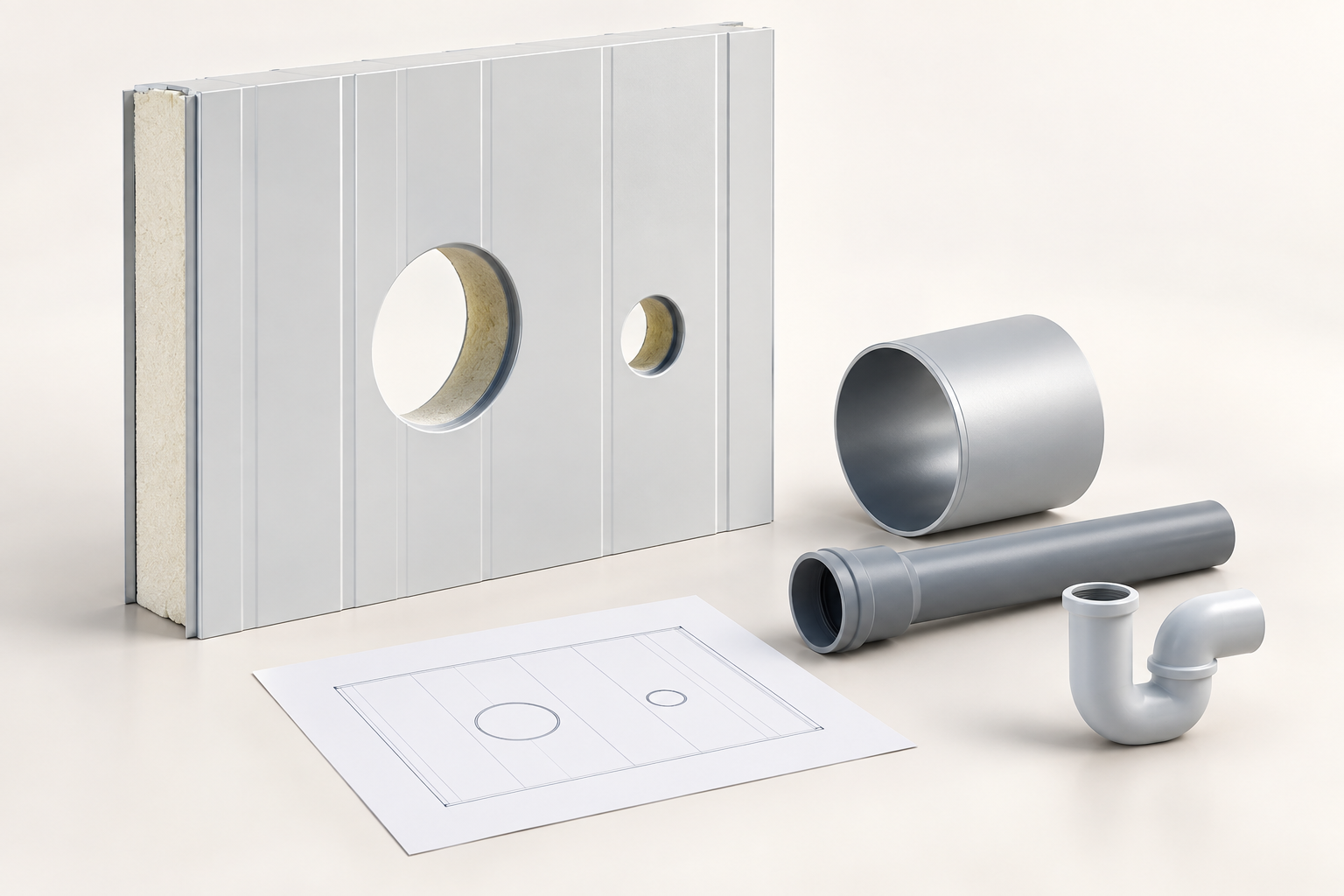
Treat every pipe or drain passing through a cold room panel as a coordinated interface. Before the interface is concealed, confirm the approved detail, service support, insulation continuity, sealing responsibilities and required inspection records. The panel opening is only one part of the finished assembly.
This guide is for the buyer or contractor coordinating different trades. It does not specify a cutting method or a universal sealing detail. Use the instructions and approved drawings for the actual panel, service and sealing materials supplied.
Carry the opening ID into the installation record
Give the service penetration the same reference on the panel layout, service drawing and inspection record. Record the room, wall or ceiling location and the current detail revision. Where an opening contains several services, identify each service rather than describing the whole opening simply as “pipe hole.”
At the ordering stage, include opening dimensions and positions in the coordinated drawings. The cold room construction guide covers the broader project coordination. For the finished service interface, keep a separate record of what was actually installed and inspected.
Distinguish three parts of the interface
The service passing through
Record the pipe, drain or other service description and its proposed support arrangement. The opening should not become an improvised support or force the service away from its designed route. The service installer should confirm required access for joints, connections and maintenance.
The insulation around the service
Where the approved design carries insulation through the panel, record the complete insulated envelope and its relationship to the opening. A bare pipe dimension does not describe that assembly. Ask the responsible designer to resolve any interruption or change in insulation at the interface.
The enclosure closure
Identify how the detail completes the panel edges and the required air/vapour control. An attractive cover plate is not evidence that the concealed parts have been completed. Obtain the applicable material and detail references before the opening is covered.
AIRAH's coldroom enclosure guidance discusses the importance of vapour sealing at service penetrations. The exact arrangement remains dependent on the supplied system and project conditions.
Separate drain questions from pipe questions
For a drain, ask the responsible installer to confirm the intended route, levels and operating arrangement. Identify any required insulation, freeze-protection provision or accessible service point in the approved design. Do not assign these details to the panel supplier simply because the drain crosses a panel.
For pipework, identify any movement, vibration or support conditions that the interface designer needs to address. Ask how the necessary service tests and inspections will be completed before access is restricted. Testing criteria belong to the relevant service specification; they should not be improvised in a panel checklist.
Where a cable or conduit shares the area, give it a separate review entry. Ask the responsible trade how its own pathway and enclosure interface will be completed. One trade finishing its work does not close the other trades' outstanding items.
Use an inspection record before concealment
Agree the stages at which the responsible people need to inspect the work. The following record helps the coordinator gather evidence without prescribing an unverified installation method.
| Inspection entry | Record for this penetration |
|---|---|
| Penetration ID and location | ______ |
| Approved detail and revision | ______ |
| Installed service and support reference | ______ |
| Insulation arrangement checked by | ______ |
| Required service testing record | Reference/status: ______ |
| Panel edge and closure detail | Material/detail reference: ______ |
| Air/vapour seal review | Responsible party and status: ______ |
| Photographs before concealment | File references and date: ______ |
| Outstanding work | Task, owner and target date: ______ |
| Permission to close the interface | Agreed reviewer, date and record: ______ |
Use photographs to show the location and visible stage of work, with the ID readable in the record. Photographs support the inspection; they do not replace a required test or prove hidden material properties.
Keep changes and defects traceable
If a route moves after the opening has been prepared, record the proposed change and have the affected detail reviewed. Identify who will address the original opening and who accepts the revised arrangement. Avoid leaving an unused penetration outside the handover records.
If condensation, frost or water appears during operation, record the location, operating conditions and observed timing before requesting assessment. These symptoms alone do not establish the cause. The responsible installer or designer should review the interface and the service conditions before a repair is selected.
Do not cover a recurring symptom with a new trim and mark the issue resolved without the agreed assessment. Keep the corrective action and subsequent check attached to the penetration ID.
Prepare the panel and service coordination enquiry
For a Jiangnan Chengxin panel enquiry, send the cold room panel requirements, room layout, service routes, operating conditions and proposed interface details through the existing contact form. State whether openings are to be prepared by the supplier or coordinated for site work, and identify any decision still pending.
Ask the quotation to define the panel-related supply scope and the information needed from other trades. Keep cutting, service installation, sealing, inspection and final approval as named responsibilities so the completed interface has a clear handover record.