By Jiangnan Chengxin Refrigeration
Concept illustration — not a fabrication drawing or factory photograph.
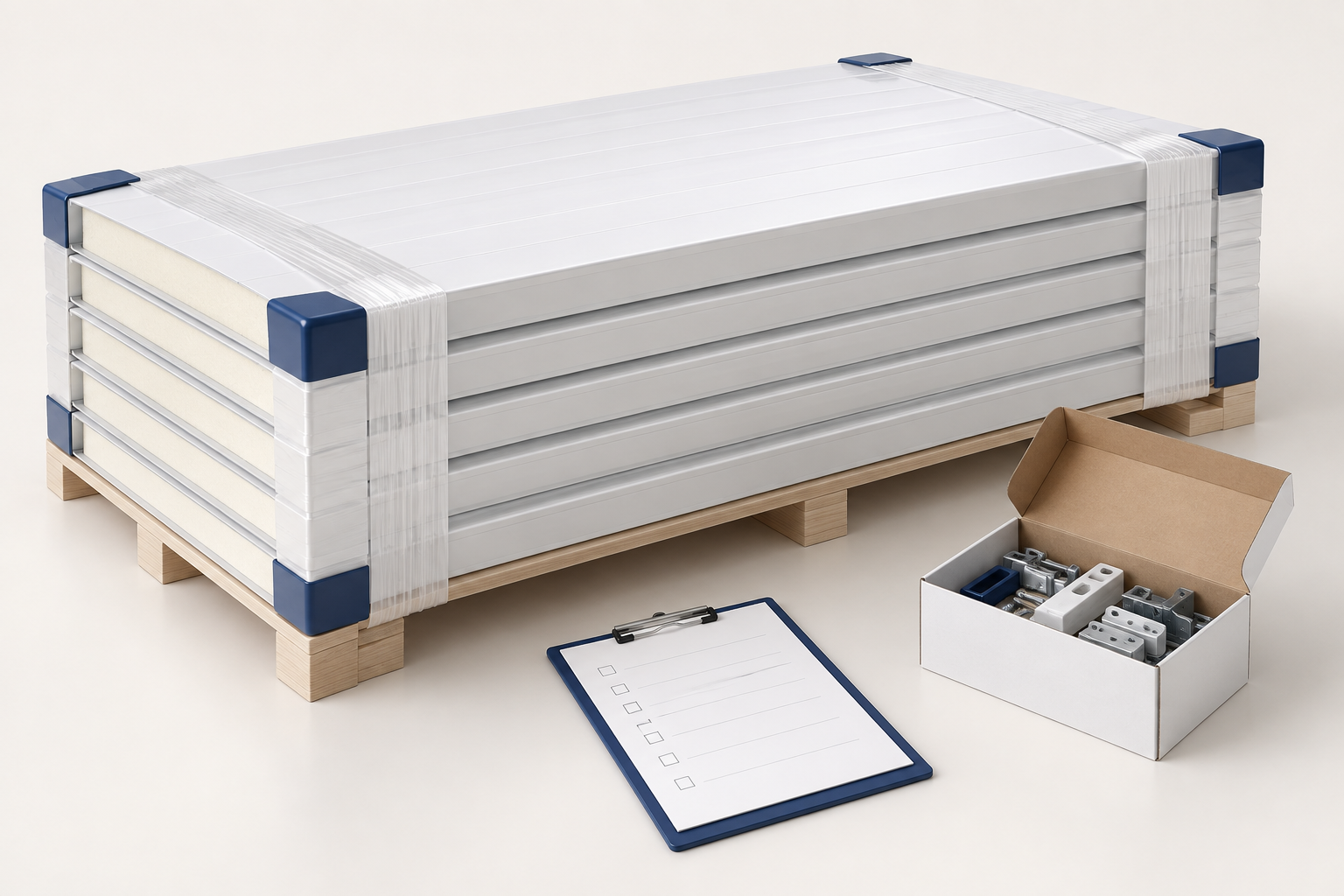
Before cold room panels are dispatched, agree how the shipment will be identified, unloaded, checked and stored. A useful packing list connects each package to the ordered items and installation references. The receiving team also needs a clear method for recording missing, damaged or unclear items before they are released for installation.
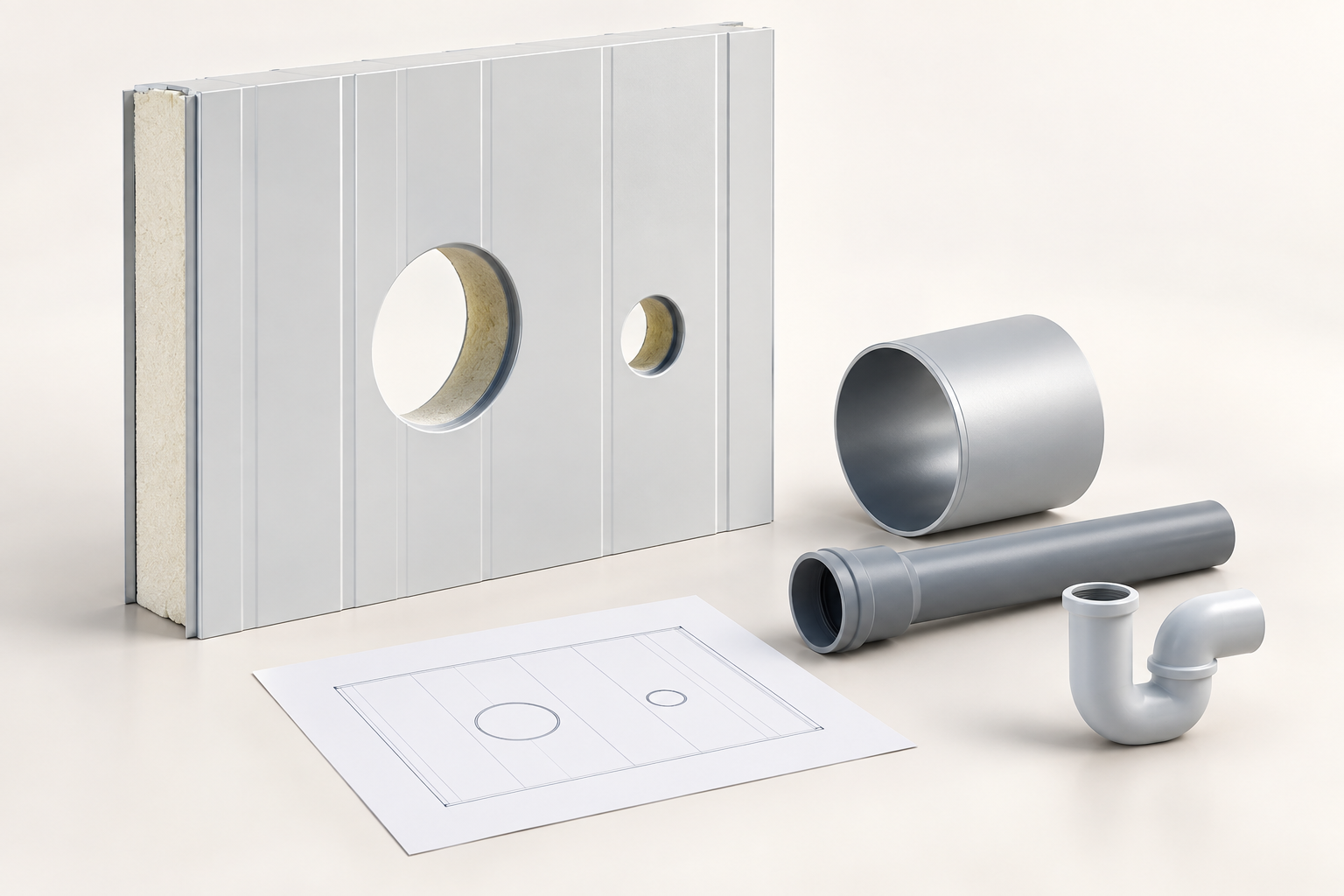
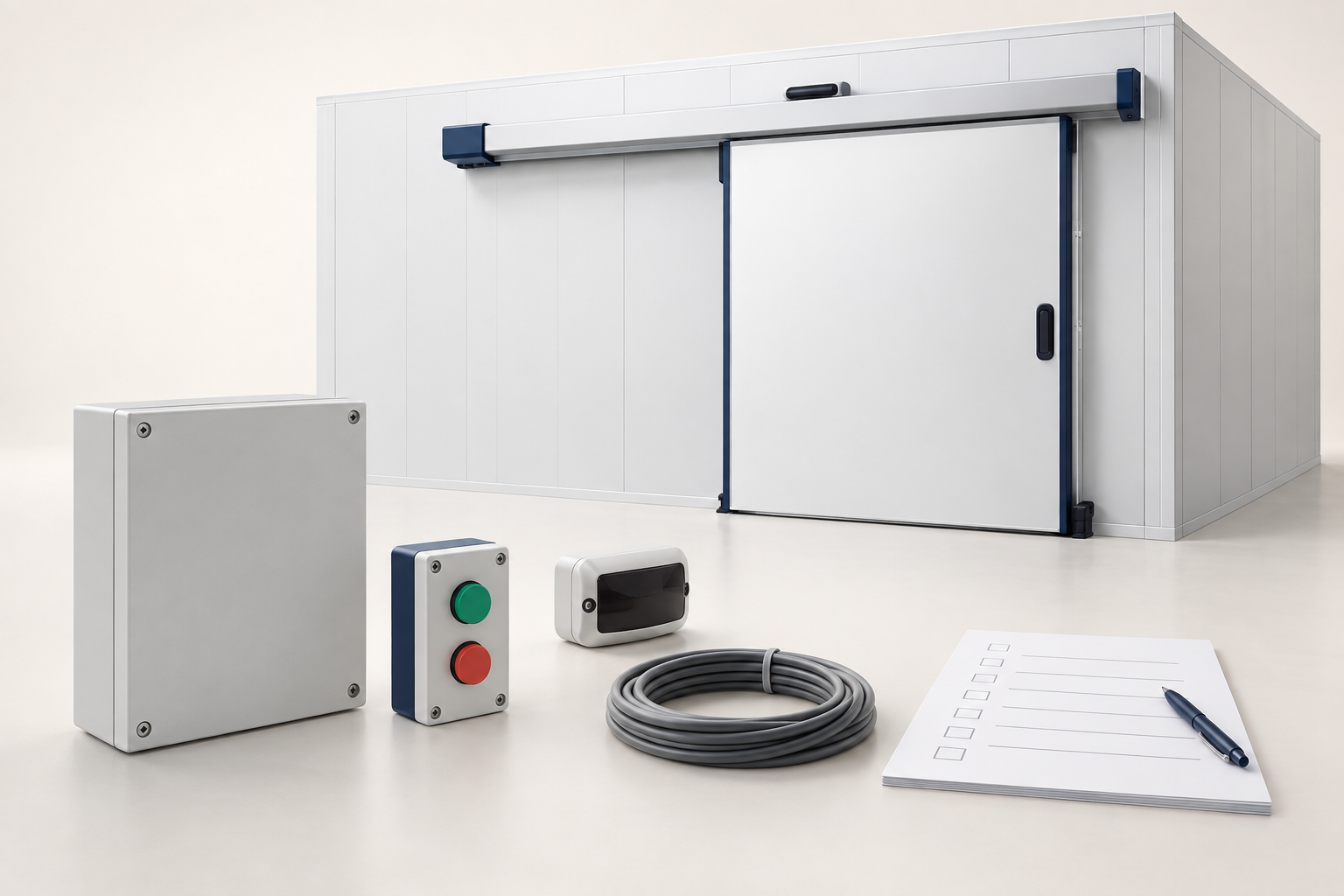
This guide focuses on panels, matching doors and the accessories actually included in the order. Confirm the scope in writing; a cold room quotation does not automatically include every material used by the site installer.
Agree the identification system before dispatch
Ask how the supplier proposes to connect the panel schedule with package labels. The order may contain panels of the same size that belong to different rooms, faces or positions. A size alone may not distinguish them.
Use room references, panel IDs or another agreed system suited to the order. Confirm where the identification will appear and how it can be read during receiving without unsafe or unnecessary handling. If individual marking is not included, agree how the receiving team will identify the contents from the documents.
For doors, request a link between the door ID, its package and any separately packed hardware. Check whether frames, tracks, guides, handles or other components are packed with the door or in separate packages. Do not assume a door leaf package contains the complete assembly.
Prepare a shipment record that the site can use
Send the receiving team the latest agreed packing information and the relevant approved schedule. Withdraw superseded versions when a quantity or package changes.
| Shipment record | Information to confirm |
|---|---|
| Order and revision | Purchase reference and final agreed item list |
| Package reference | Unique mark used on the packing list and package |
| Contents | Item description, quantity and panel/door references where used |
| Package information | Dimensions and weight information needed for handling |
| Separately packed items | Accessory description and associated room or door |
| Unloading instructions | Applicable supplier guidance and site arrangement |
| Storage instructions | Conditions and precautions for the supplied products |
| Discrepancy contact | Agreed reporting route and required supporting records |
The purpose is traceability, not extra paperwork. A list of total square metres may describe a commercial quantity while still being insufficient to identify the panels needed at a particular stage of installation.
Check site access before the vehicle arrives
Tell the supplier about access restrictions, unloading equipment and the route from the delivery point to storage. Obtain package dimensions and weight information early enough for the site team to prepare an appropriate handling plan.
The receiving contractor should choose equipment and handling methods using the actual package information and supplier instructions. Do not infer that a long bundle can be lifted in the same way as a short one. This checklist does not prescribe lifting points, sling positions or equipment capacities.
Identify a suitable storage area before unloading. The plan should also address who will protect and inspect materials if installation is delayed. Packaging intended for shipment should not be assumed to provide indefinite outdoor storage protection.
Record the condition before moving items into use
Start with the delivery references and visible package condition. Compare package marks and quantities with the current packing list. Record damaged wrapping, impact marks, signs of moisture or unclear identification so the supplier can assess the issue with the receiving team.
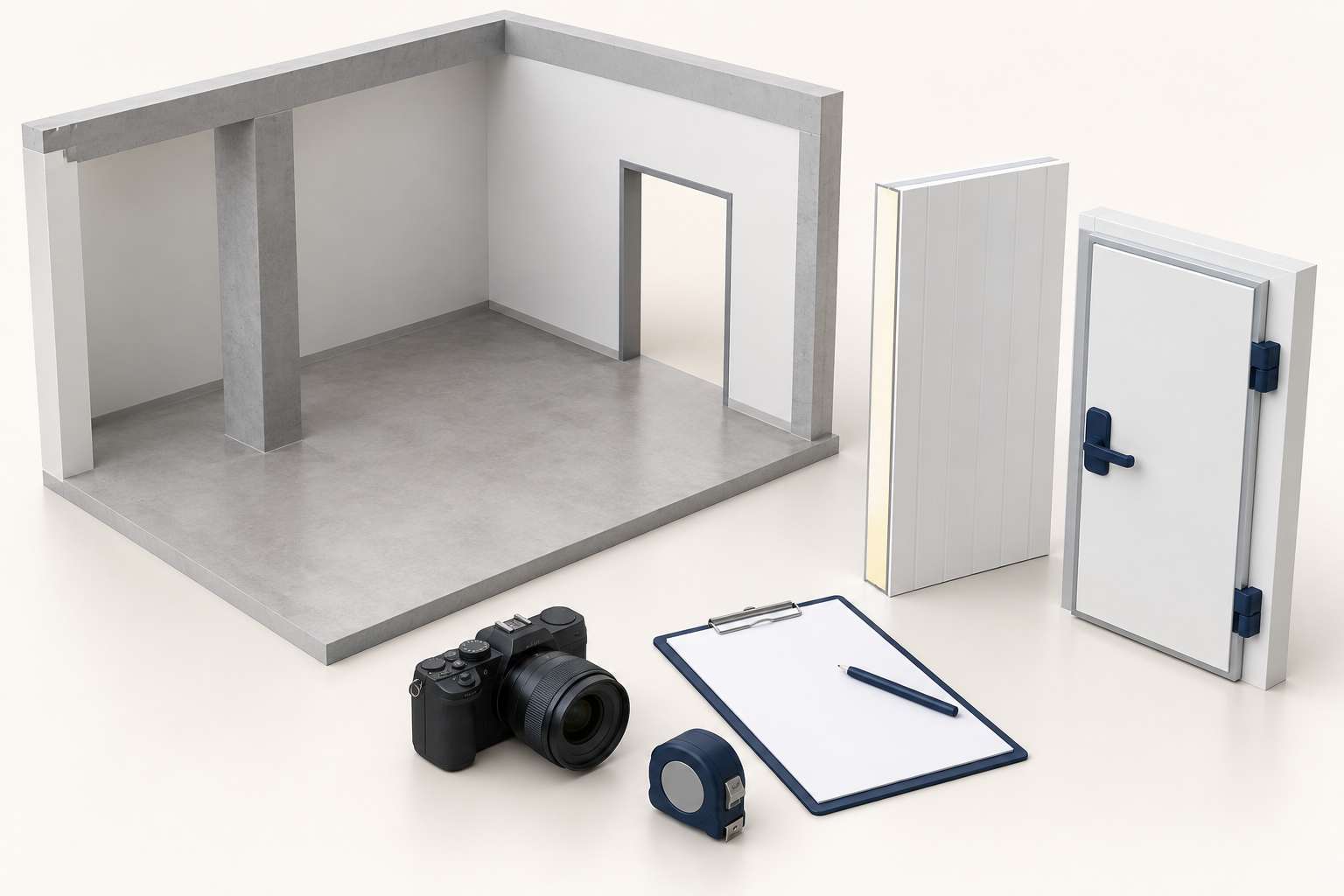
When packages are opened under the agreed receiving procedure, check accessible faces, edges, joints and supplied accessories. Record the item ID and location of any concern. Keep photographs of the label, overall item and affected area together; a close-up without identification is difficult to trace.
Manufacturer storage information matters after receiving. Metl-Span's storage guide, for example, identifies risks from inappropriate storage and moisture trapped between panel faces. Follow the instructions for the actual supplied products rather than copying another system's wrapping or storage procedure.
Use one discrepancy record per issue
Keep observed facts separate from assumptions about who caused the problem. Report through the agreed contractual process and retain the original records.
| Discrepancy field | Entry |
|---|---|
| Delivery date and reference | ______ |
| Package and item ID | ______ |
| Expected description/quantity | ______ |
| Received description/quantity | ______ |
| Observed condition | ______ |
| Photographs and document references | ______ |
| Current location and installation status | ______ |
| Reported to and date | ______ |
| Agreed next action and responsible party | ______ |
Mark affected items as awaiting review until the relevant party confirms the next action. Do not undertake an unapproved repair or install a questionable panel merely to keep the sequence moving. Separate material acceptance from the commercial handling of a claim.
Release a complete installation package
Before installation starts in a room or zone, check that the relevant panels, doors and listed accessories have been identified and that outstanding issues are visible. Record accepted items separately from items still awaiting clarification. This helps prevent a missing small component from being discovered only after its location becomes difficult to access.
For a quotation, send Jiangnan Chengxin Cold Room Factory your cold room panel schedule, any matching sliding doors, destination, receiving constraints and requested identification system through the existing enquiry form. Ask which packing, labelling and documentation provisions are included in the offer before the order is confirmed.