
By Jiangnan Chengxin Refrigeration
Concept illustration — not a fabrication drawing or factory photograph.
Select cold room panel thickness from the project's thermal conditions and the performance data for the proposed panel system. Give the reviewer the required room temperature, conditions around the enclosure, room geometry and operating duty. A temperature-to-thickness table can help start a discussion, but it does not settle the specification for every site.
The buyer's practical task is to make the inputs clear and consistent. When each supplier receives different assumptions, two thickness proposals cannot be compared meaningfully. Record unknown conditions and ask who will confirm them before an order is approved.
Define the conditions on both sides of each surface
State the room's required operating temperature and expected range, with units. Explain whether the room stores already-cooled goods or is intended to cool or freeze incoming product. The required product process and the refrigeration design should be confirmed by the responsible project team.
Describe what surrounds each wall, the ceiling and the floor. An enclosure inside a warehouse may face different conditions from one exposed outdoors. A partition between two temperature-controlled rooms has a different surrounding condition from an external wall. Record relevant temperature and humidity information rather than substituting a country name for design conditions.
Tell the reviewer about solar exposure or hot adjacent spaces where applicable. If site measurements or design conditions are not available, mark them as unconfirmed; do not present an assumed value as measured evidence.
Provide an input sheet with the enquiry
| Input | Information to provide |
|---|---|
| Room purpose | Stored product, storage or processing duty |
| Required conditions | Temperature/range, units and any specified humidity requirement |
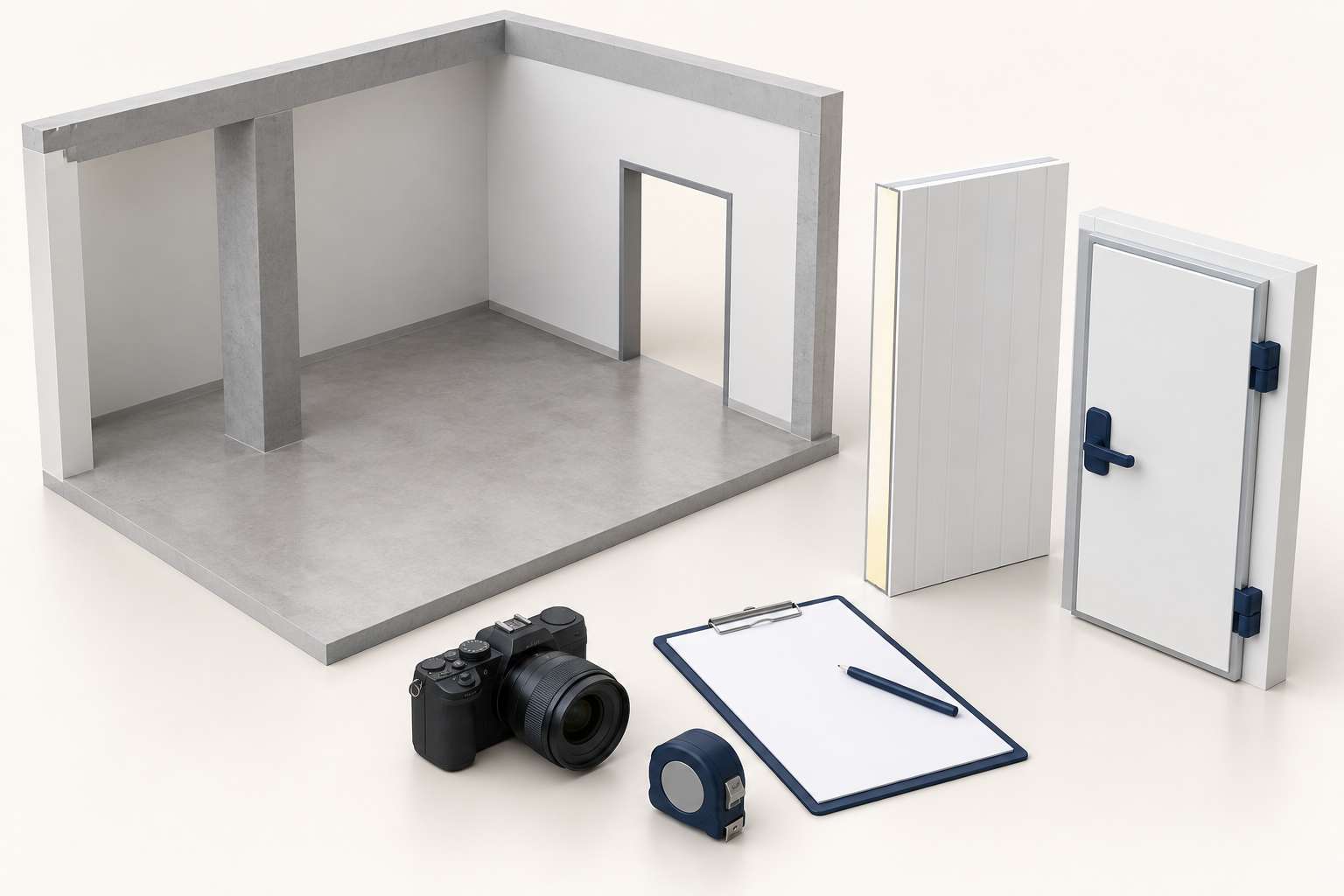
| Geometry | Dimensioned plan and height; internal or external measurement basis |
| Surroundings | Conditions adjacent to each wall, ceiling and floor |
| Location and exposure | Indoor/outdoor arrangement, building shelter and known exposure |
| Operating pattern | Working hours, door use and relevant traffic information |
| Product loading | Incoming condition, quantity and process information for the designer |
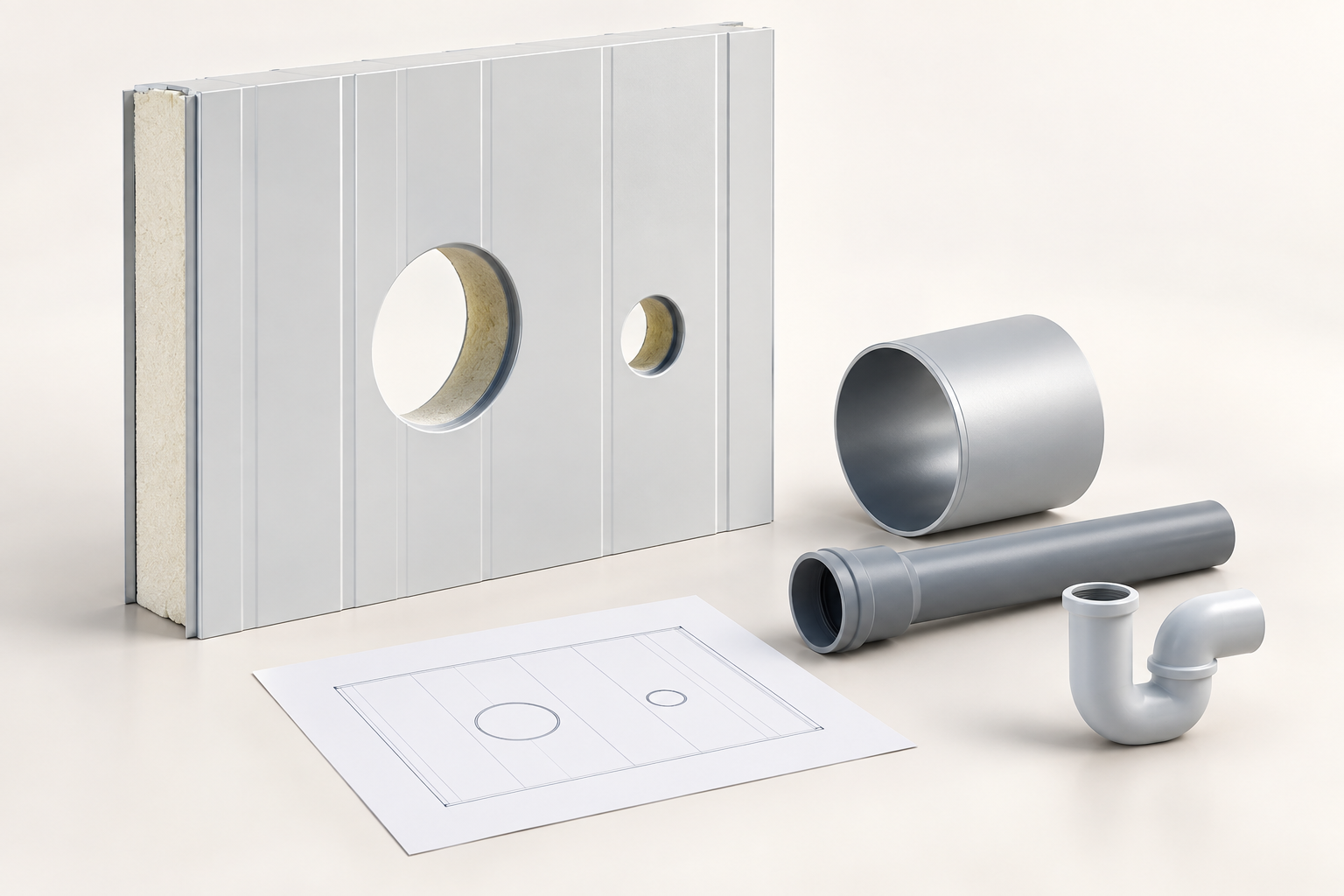
| Enclosure interfaces | Doors, partitions, floor construction and planned penetrations |
| Project criteria | Required thermal target or other written project requirement |
| Unknown inputs | Responsible party and date needed for confirmation |
Separate measured information from design assumptions in this sheet. If a requirement changes, issue an updated revision so the supplier and project designer do not continue using different versions.
Ask what performance value supports the proposal
Request the product data for the offered core, thickness and panel construction. Keep the quoted thermal value, units and stated conditions together. Do not use a value from another manufacturer's data sheet as proof of the offered product's performance.
For example, Purever's cold room panel data sheet presents thickness, thermal transmittance and temperature-difference information for its own product. It shows the type of information a buyer can request, not a set of Jiangnan Chengxin design values.
Ask the responsible reviewer to explain the basis for the selected thickness and identify any unresolved assumptions. If two offers use different panel constructions or performance measures, request comparison on an agreed basis rather than comparing thickness alone.
Keep panel heat transfer separate from the whole cooling duty
The panel specification is one input to the cold room design. Doors, incoming product, operating activities and other loads also need consideration by the refrigeration designer. Increasing panel thickness does not remove the need to evaluate those conditions.
Likewise, a proposed thickness alone does not establish that condensation will be prevented at every joint or interface. Ask how the complete enclosure, including doors, corners, floor connections and penetrations, is to be reviewed for the project conditions.
Avoid accepting a fixed electricity-saving percentage without the supporting project calculation and assumptions. A comparison should state what has changed, what remains the same and which operating conditions were used. Product information and a project energy forecast are different documents.
Review the effect on dimensions and interfaces
A thickness change may affect internal space or external footprint, depending on which dimensions are fixed. Ask the supplier to show the selected arrangement on the layout. Do not approve a revised thickness while leaving the drawing dimensions unresolved.
Check door frames, corners, junctions with existing construction and floor transitions against the revised panel specification. Ceiling support and other structural matters need their own review; thickness selected for thermal reasons should not be treated as proof of structural suitability.
Review the cold room panel range and, where PIR is being considered, the PIR panel product page. Identify the requested construction in the enquiry so the quotation can address the correct product rather than an unspecified “insulated panel.”
Compare alternatives on one set of assumptions
If the reviewer proposes more than one option, record the offered product, thickness, documented thermal basis, layout effect and included interface materials side by side. List any difference in the supply scope before comparing prices.
Keep the final decision attached to the approved input sheet and drawing revision. If the room duty, surrounding conditions or required dimensions change later, ask whether the panel selection and related details need to be reviewed again.
Send a complete thickness enquiry
Send Jiangnan Chengxin Cold Room Factory the input sheet, room layout, intended panel scope and destination through the existing enquiry form. State whether a thickness is already specified by your designer or whether you are requesting a proposal for review.
Ask the response to identify the offered panel, its available supporting data and the assumptions still requiring confirmation. This gives the purchasing team a documented basis for the next decision without turning a preliminary thickness suggestion into a universal design rule.