Cold Room Temperature Guide for Food, Seafood and Pharmaceutical Storage
A temperature requirement should describe the condition the goods need, not simply the number an operator enters into a controller. Buyers must connect the product specification, the room’s intended duty and the method used to check performance. Without that connection, two suppliers may quote different systems against what appears to be the same request.
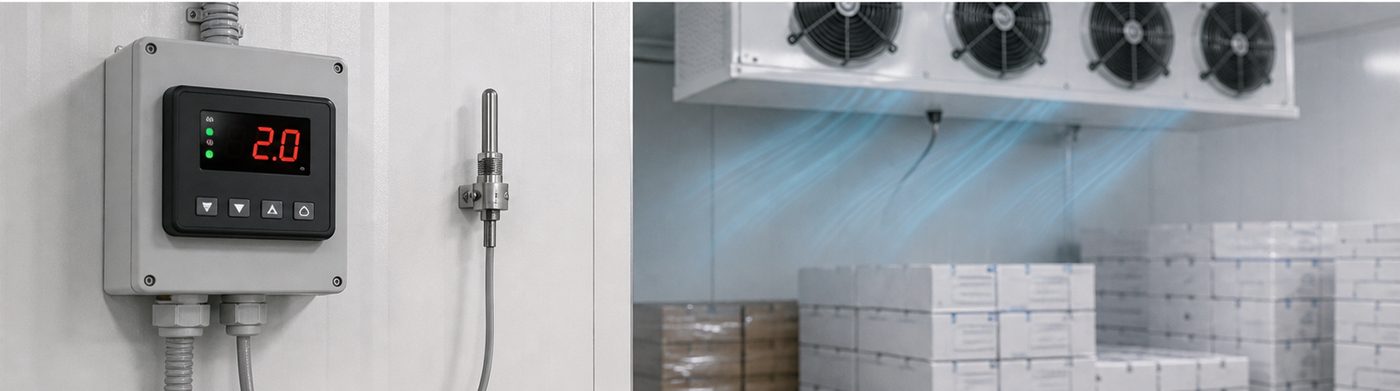
Begin by obtaining the approved storage instructions for the actual products. Record the source of those instructions and identify the person responsible for accepting them. Generic tables can help frame a discussion, but they should not become the purchase specification for an unidentified food, medicine or vaccine.
Separate product limits from equipment settings
A product’s permitted storage conditions, the controller setting, the room air measurements and the product measurements are related but different information. Ask the designer and responsible quality team to explain how the proposed settings and monitoring arrangement support the required product condition.
State whether the room will hold goods that already meet their storage requirement or must change their temperature after arrival. Include the incoming condition and the permitted processing time when cooling or freezing is part of the duty. This distinction should appear in the quotation and acceptance plan.
Group goods by confirmed requirements
Create a list showing product identity, packaging, required conditions, expected storage duration and any restrictions on mixed storage. Where products differ, ask the responsible team whether separation or another room is needed. Do not resolve incompatible requirements by choosing an arbitrary setting between them.
FAO’s temperature and humidity guidance explains that some produce can suffer chilling injury above its freezing point. This is why colder is not automatically better for every fresh commodity. Confirm the requirements of the actual produce and its intended handling process.
Specify how temperature will be observed
Describe which measurements are needed for control, routine observation, records and acceptance. Ask where sensors will be located and how the locations will be justified. Identify who checks instruments and who reviews the resulting records.
For temperature-sensitive pharmaceutical products, WHO guidance on temperature mapping describes using a study to establish temperature distribution and locate hot and cold areas. The applicable product label and the operator’s quality requirements remain the basis for the permitted storage conditions; this guide does not assign a universal medicine or vaccine temperature.
Agree on the conditions represented by commissioning measurements. Record whether the room is empty or loaded, the layout in use and the operating activity during the observation period. These details help distinguish an accepted result from a reading taken under unrelated conditions.
Account for normal operating events
Provide the designer with delivery schedules, door-use patterns and any planned cleaning or interruption periods. Ask how these events will be considered in the equipment and monitoring proposal. A specification based only on quiet overnight storage may not represent the busiest part of the day.
Review the intended loading arrangement around the equipment. The operating plan should identify positions that need to remain clear and changes that require review. When staff add shelving or alter stock locations, the responsible team should consider whether previous observations still represent the new arrangement.
Define the alarm decision process
An alarm plan should identify the condition being detected, the person notified and the action expected. The setpoints and response timing must be reviewed against the equipment design and product procedures, rather than copied from an unrelated room.
- Who receives notifications during and outside the normal shift?
- What information should they check before deciding the next action?
- Who decides the disposition of affected goods?
- How are observations, actions and decisions linked to the stock record?
Do not use the absence of an alarm as the only basis for accepting product condition. Agree on the records required for the operation and make them available to the people responsible for review.
Turn the requirement into an enquiry
Send the product list, required conditions, incoming load description and monitoring expectations with the room layout. Identify whether you need a chiller room, frozen storage room or a separately assessed freezing process. Request a quotation that records the agreed duty and any assumptions still awaiting confirmation.
Can changing the controller setting solve an unsuitable room specification?
Do not assume so. Ask the responsible refrigeration professional to review the equipment, enclosure and operating duty before changing the room’s intended use.
What is the correct temperature for a particular medicine?
Use the manufacturer’s labelled storage instructions and your applicable quality procedures. Provide the exact product requirements for project review; the word pharmaceutical alone is not a usable temperature specification.