
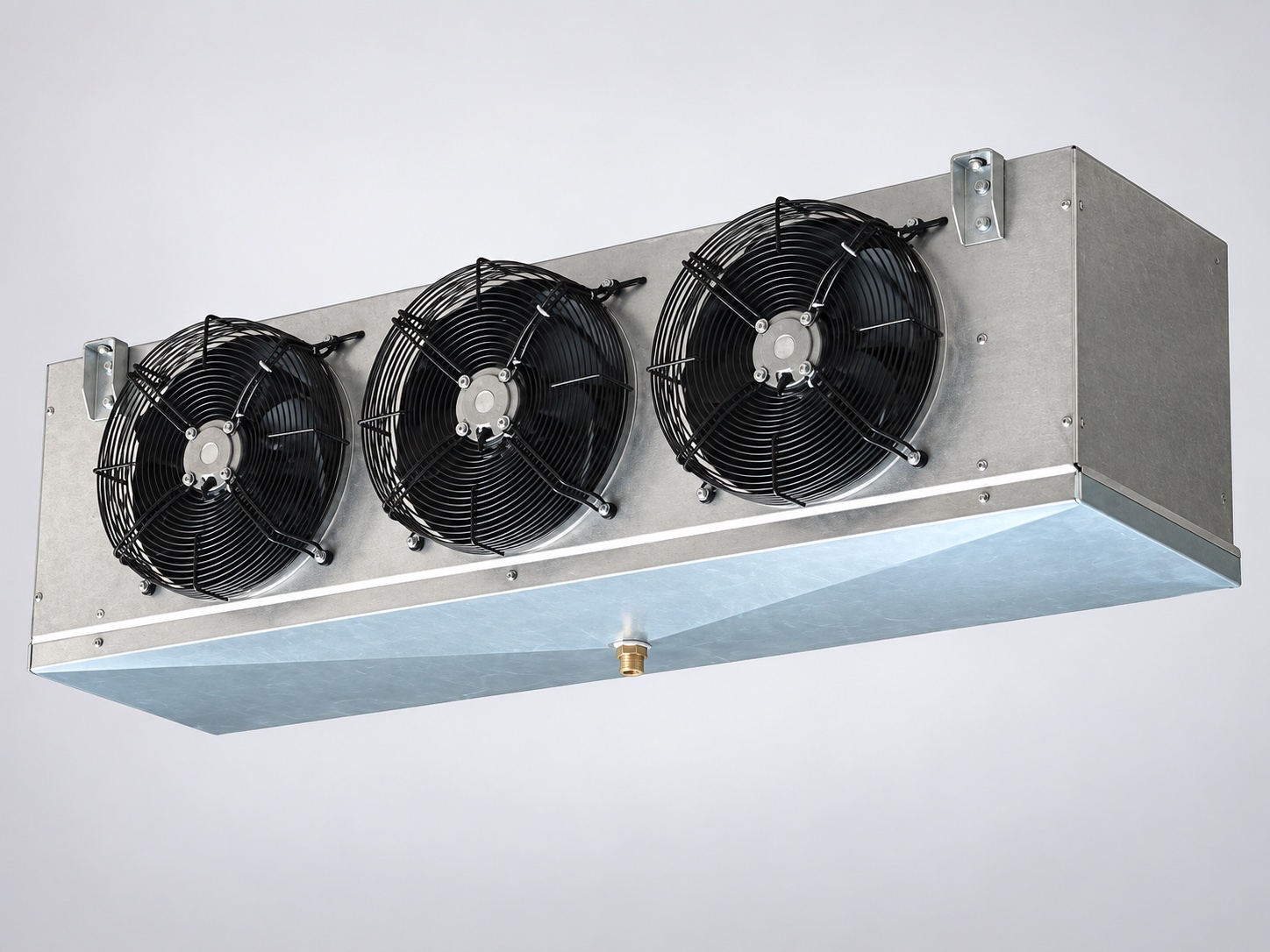
Ceiling Type Air Cooler Engineering Overview
Ceiling type air cooler is widely used in walk-in cold rooms, chiller rooms, freezer rooms, and food storage rooms. It saves floor space and distributes cold air from the upper part of the room.
Correct model selection depends on heat load, fin spacing, airflow throw, fan heat, defrost method, drainage, and compatibility with the condensing unit. Undersized or poorly placed air coolers cause slow pull-down and uneven temperature.
JiangNan can match ceiling type air coolers with insulated panels, doors, condensing units, controllers, and accessories. This is useful for export customers who need a complete cold room package.
Airflow Layout
Airflow should reach the stored goods without being blocked by shelves or blowing directly on sensitive products.
Defrost Reliability
Defrost heaters, cycle time, drain pan, and drain pipe should be selected for freezer use to avoid ice accumulation.
Drainage Planning
Drainage should have slope, insulation, and heat protection where freezing is possible. Poor drainage is a common cause of ceiling ice.
Maintenance Access
Fan motors, coils, drain pan, and electrical components need accessible service space.
Technical Specifications
| Product Type | Ceiling Type Air Cooler |
|---|---|
| Cooling Capacity | selected by room load and working condition |
| Room Temperature | 0C to -25C or project-specific conditions |
| Fin Spacing | 4.5 mm, 6 mm, 9 mm, or wider by temperature and frost condition |
| Defrost Method | air defrost for suitable chilled rooms, electric defrost for freezer rooms, hot gas by project system |
| Fan Type | axial fan selected by model and airflow requirement |
| Fan Motor Protection | IP protection by selected motor specification |
| Voltage | customized by destination country and project configuration |
| Coil Material | copper tube with aluminum fins or project-specific configuration |
| Drain Pan | standard or low-temperature design according to defrost method |
| Installation Method | ceiling suspended installation with service space |
| Application | walk-in cold rooms, chiller rooms, freezer rooms, food storage rooms, and compact warehouses |
Related Ceiling Type Air Cooler Projects
Czech Republic Frozen Storage
Temperature: -18C
Room size: 6 × 8 × 2.8 m
Panel thickness: 150 mm
Frozen storage using thicker insulation, freezer door sealing, and low-temperature refrigeration equipment.
Argentina Seafood Cold Room
Temperature: -25C
Room size: 8 × 10 × 3 m
Panel thickness: 150 mm
Seafood storage project focused on corrosion-resistant surfaces, stable pull-down, and careful packing for export.
Supermarket Cold Room
Temperature: 0C to 5C
Room size: 4 × 6 × 2.6 m
Panel thickness: 100 mm
Back-of-store chilled room for dairy, beverage, produce, and daily replenishment operation.
Pharmaceutical Cold Storage
Temperature: 2C to 8C
Room size: custom
Panel thickness: 100 mm
Temperature-stable room layout with controlled access, reliable sealing, and clear maintenance space.
Walk-in Freezer Project
Temperature: -18C
Room size: custom
Panel thickness: 120 to 150 mm
Small and medium freezer room reference for restaurants, distributors, and frozen food storage.
Request a Ceiling Type Air Cooler Quotation
Send your room size, target temperature, stored product, daily loading, voltage, and destination country. JiangNan will provide a practical configuration suggestion and quotation within 24 hours.
Air Cooler Selection Guide
Start from the room heat load, not only from the room volume. Heat load includes panel heat gain, product loading, personnel, lights, door opening, fan motor heat, defrost heat, and safety allowance. If goods enter the room warm, the required capacity can be much higher than a simple holding room.
Chiller Rooms
Usually need stable airflow, moderate fin spacing, drainage planning, and fan selection that does not dry sensitive products excessively.
Freezer Rooms
Need wider fin spacing, reliable electric or hot gas defrost, insulated drain, and heater details to prevent ice accumulation.
Processing Rooms
Need hygiene-aware installation, easy cleaning, controlled airflow, and defrost settings that do not disturb production.
Warehouses
Need throw distance, rack clearance, service access, and multiple-unit airflow balance checked before installation.
For small cold rooms, the air cooler is often close to shelves or doors. Check physical position before confirming the model.
Applications
Seafood Cold Storage
Requires low-temperature operation, corrosion-aware selection, reliable defrost, and drainage that does not freeze.
Meat Processing
Needs stable temperature, easy cleaning access, and airflow that supports hygiene and product safety.
Dairy Storage
Requires chilled airflow stability and reduced temperature fluctuation during daily access.
Vegetable Storage
Needs airflow that avoids direct freezing, excessive drying, or blocked circulation around crates.
Pharmaceutical Cold Room
Requires stable temperature distribution and reliable maintenance access for controlled storage.
Logistics Warehouse
Needs air distribution around racks, dock traffic recovery, and coordinated equipment service routes.
Factory, Installation, and Service Details
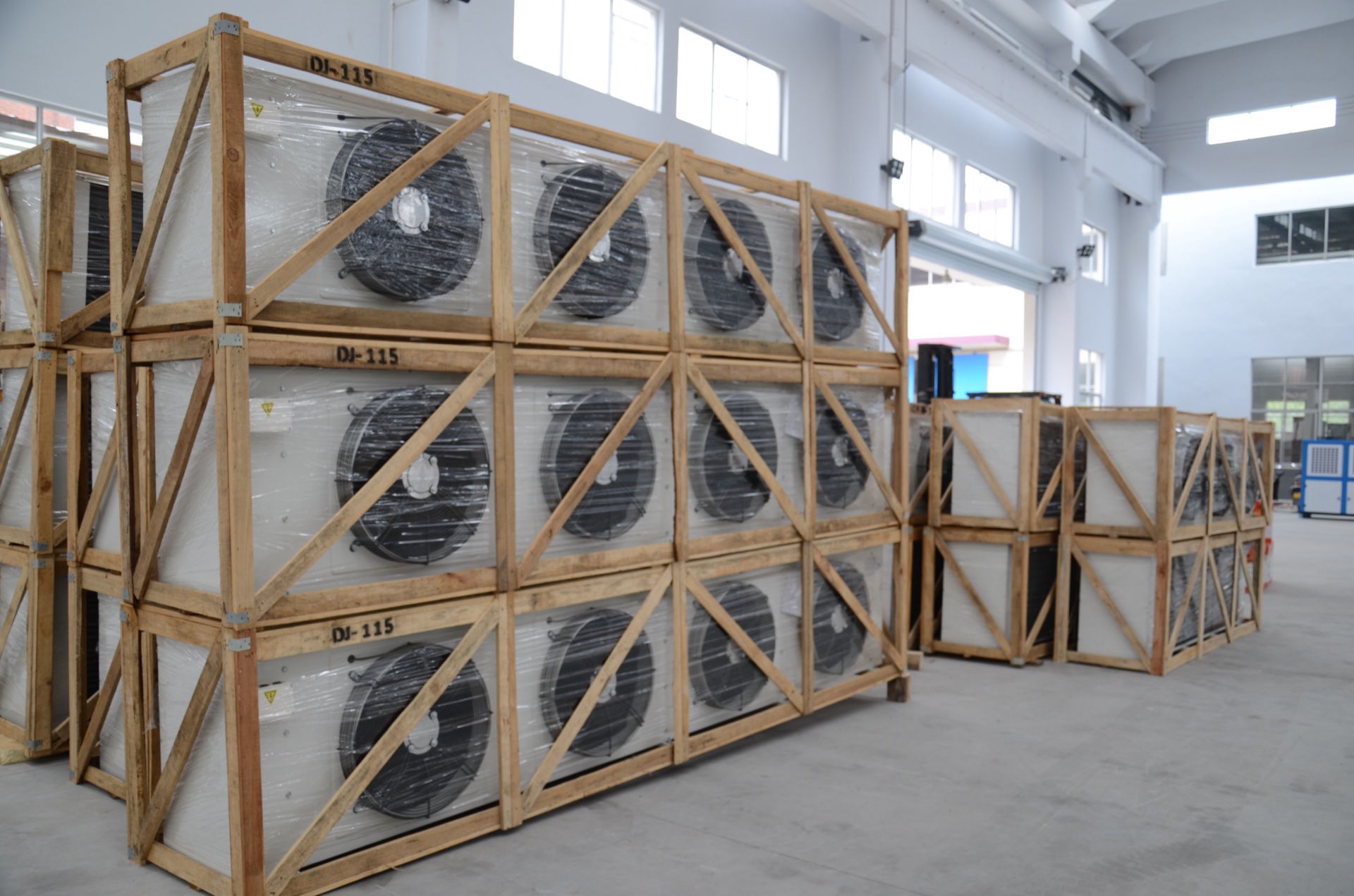
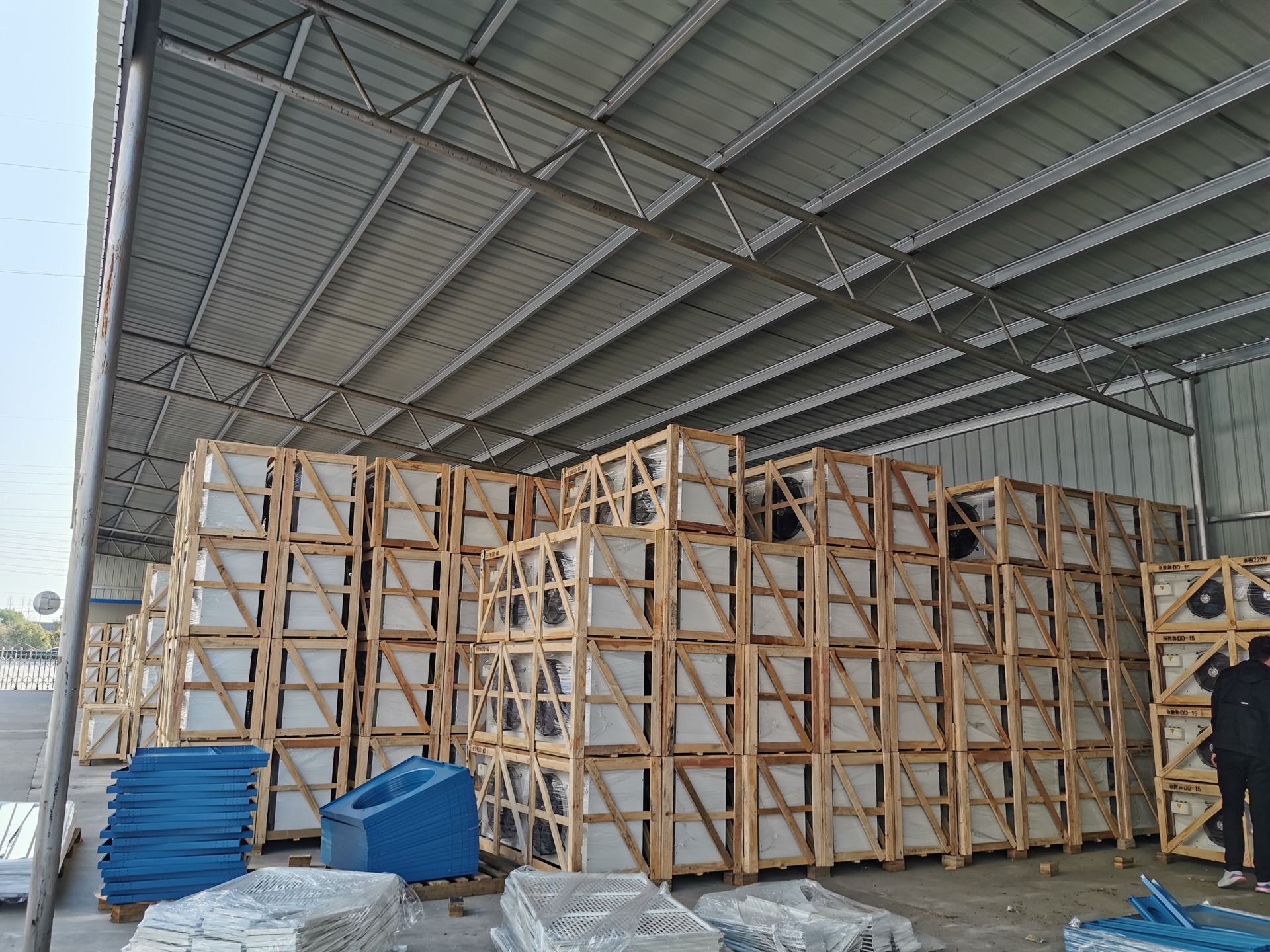
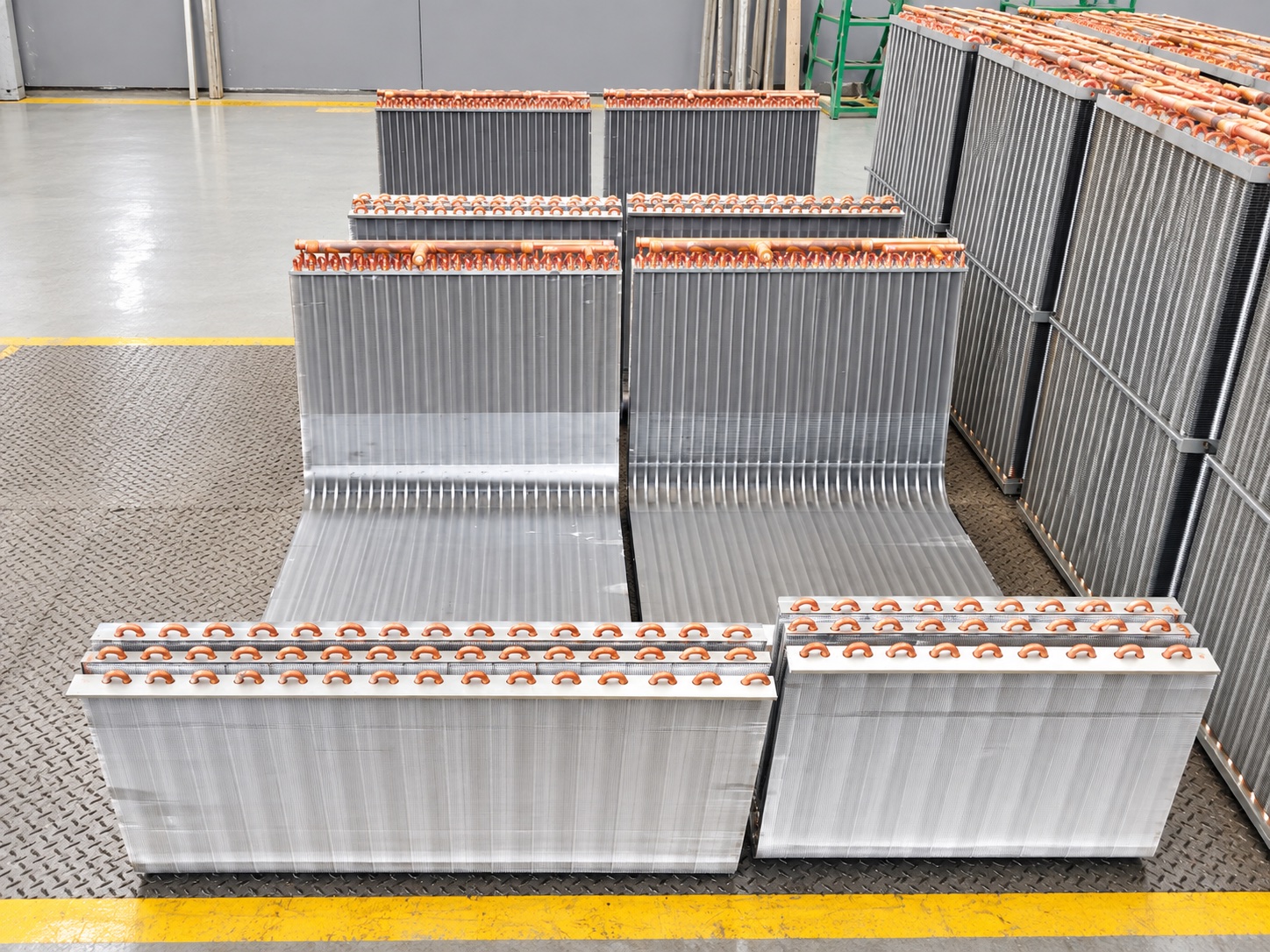
JiangNan checks air cooler selection together with room panels, doors, condensing unit, controller, expansion device, wiring, defrost, and drain layout. For export orders, the packing list should identify model, voltage, fan quantity, defrost type, accessories, and installation position.
Installation Notes
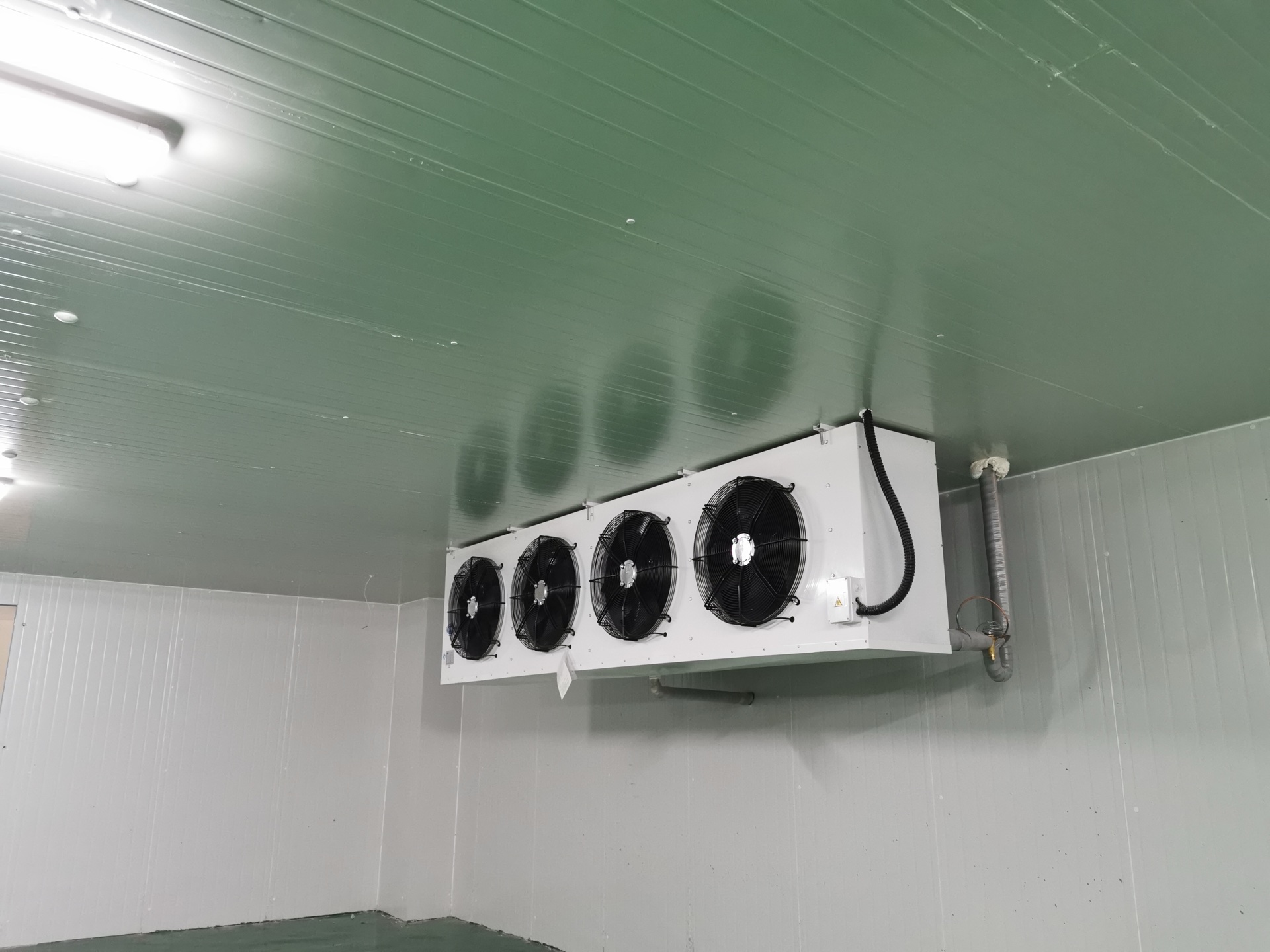
Install the unit level, keep proper clearance, protect drain route, and avoid placing the air cooler directly above doors where warm humid air enters frequently.
Service Notes
Leave space for fan motor service, coil cleaning, drain pan inspection, heater replacement, valve adjustment, and electrical checks. Air coolers installed too close to walls, shelves, beams, or product stacks can lose airflow and make the room unstable.
How to Choose the Right Ceiling Type Air Cooler
Confirm whether the room is for chilled holding, freezer storage, product cooling, or processing. Each use changes capacity and defrost selection.
Select fin spacing from room temperature and humidity. Wider spacing helps freezer operation but may require a larger coil size.
Match fan airflow with room shape. Long rooms, shelves, and partitions may need different unit position or multiple smaller units.
Check drainage, heater voltage, service clearance, and controller settings before shipping the equipment.
Why JiangNan
Established in 1997
JiangNan has long-term manufacturing experience in insulated panels, cold room doors, refrigeration components, and complete cold room projects. This helps the quotation team check panel thickness, door type, refrigeration capacity, packing volume, and installation details together instead of treating each item separately.
20,000 m² Manufacturing Facility
The factory supports panel production, door assembly, hardware preparation, trial fitting, packing, and container loading. For export orders, drawings, material lists, and packing plans are checked before shipment to reduce missing parts and installation delay at site.
150+ Employees
Production, technical, sales, and after-sales teams work together on room layout, panel cutting, door opening, refrigeration matching, and accessories. Practical factory communication is important when the customer only has room size, product type, target temperature, and destination country at quotation stage.
OEM, ODM, and Export Support
OEM and ODM cooperation is available for distributors and contractors. JiangNan can provide complete cold room solutions, including panels, doors, air coolers, condensing units, accessories, packing lists, and installation guidance for overseas projects.
Related Products and Articles
Cold Room Panel
PU or PIR insulated panels with cam lock joint for chiller, freezer, and warehouse construction.
Cold Room Sliding Door
Manual sliding door selection for low-temperature and high-traffic cold rooms.
Electric Sliding Door
Motorized sliding door for frequent forklift traffic and logistics warehouses.
Ceiling Type Air Cooler
Air cooler selection for compact cold rooms and standard storage areas.
Cold Storage Warehouse Guide
Warehouse layout, insulation, door, dock, refrigeration, and energy design guidance.
Cold Room Temperature Guide
Temperature ranges for food, seafood, meat, vegetables, dairy, and pharmaceutical storage.
FAQ
What information is needed to quote Ceiling Type Air Cooler?
Please send the country, room size, target temperature, stored goods, daily loading quantity, refrigerant preference if any, voltage, defrost requirement, and whether the room is chiller, freezer, processing room, or warehouse. These details are needed to select capacity, fan type, fin spacing, and defrost method.
How is air cooler capacity selected?
Capacity is selected from room heat load, target temperature, product loading, door opening, insulation thickness, ambient condition, and required pull-down time. The air cooler should match the condensing unit and expansion device, not be selected only by room volume.
What fin spacing should be used?
Chilled rooms can use smaller fin spacing, while freezer rooms usually need wider spacing to delay frost blockage. Too small fin spacing in a freezer can block with frost quickly, while too large fin spacing can reduce heat transfer area for some chilled applications.
Which defrost method is recommended?
Electric defrost is common for freezer rooms; air defrost can be used only where room temperature and humidity are suitable. Defrost must match room temperature, humidity, operating time, and drainage condition.
Where should the air cooler be installed?
Ceiling installation should leave fan service space, drain slope, and airflow clearance from shelves and walls. The installation position should avoid blocked airflow, direct short cycling, and difficult maintenance access.
Can JiangNan supply the complete refrigeration system?
Yes. JiangNan can supply air coolers with condensing units, panels, doors, controllers, valves, copper pipe accessories, and installation guidance. Matching the full system reduces selection mistakes.
What voltage is available?
Voltage should be confirmed by project country. Common options can be discussed according to fan motors, heaters, controller, and condensing unit configuration.
How should drainage be handled?
Drain pipe route, slope, insulation, heat tracing if needed, and water discharge point should be planned before installation. Poor drainage can cause ice, water leakage, and fan or ceiling damage.
How often should the air cooler be maintained?
Fans, coil surface, drain pan, heater, wiring, and defrost settings should be checked regularly. Maintenance frequency depends on dust, packaging debris, humidity, and product type.
Can the air cooler be exported with the cold room panels?
Yes. Air coolers can be packed with panels, doors, accessories, and refrigeration equipment. The packing list should identify model, voltage, defrost type, accessories, and installation position.