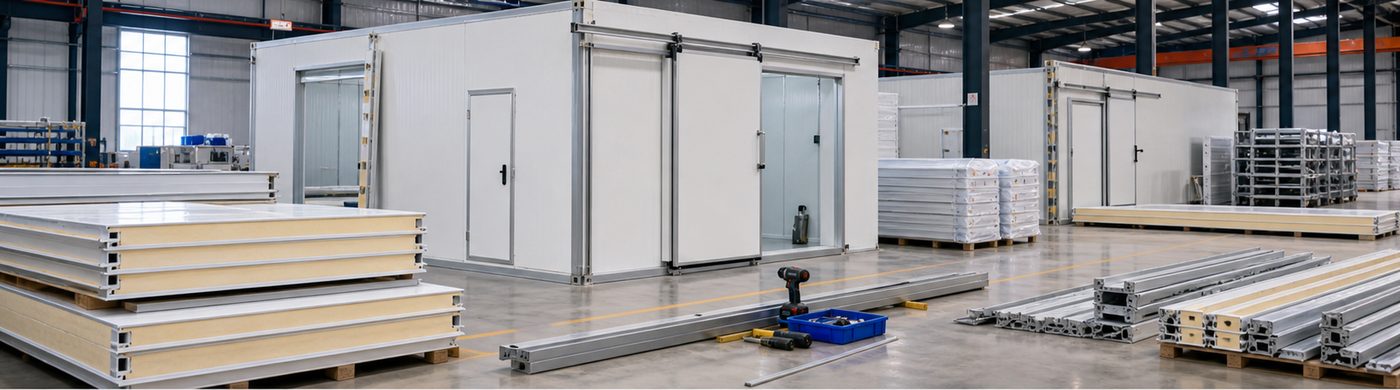
Cold Room Manufacturer Guide: How to Choose a Factory for B2B Projects
A factory assessment should connect the product offered to the process used to make it. Workshop photographs can begin a conversation, but a purchasing decision needs clearer evidence: what is manufactured, which specifications are controlled and how the order will be checked before dispatch.
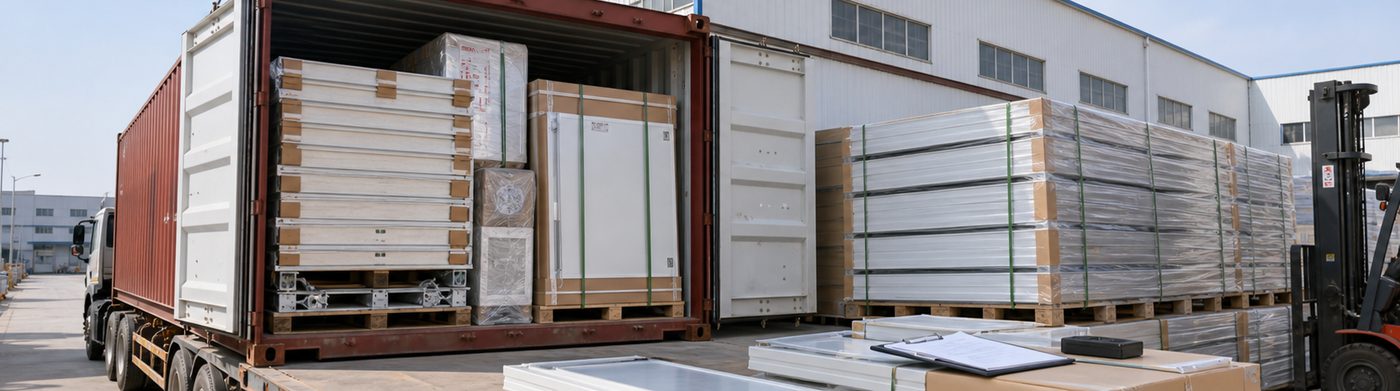
For cold room panels and doors, organise the review around the route from approved drawing to packed product. This makes an on-site visit or remote factory discussion more useful than a general presentation about production experience.
Confirm what the factory makes
Ask the manufacturer to identify its own production activities and any components purchased from other businesses. Panels, door assemblies, hardware and refrigeration equipment do not necessarily come from the same production line. Clear boundaries help the buyer understand which questions the factory can answer directly.
Review the relevant panel, custom panel and door specifications before discussing capacity. Ask how the proposed order differs from the products shown and which differences need engineering approval.
Trace one item through the document process
Select a panel or door from your proposed order and ask the factory to explain how its dimensions and materials reach production. The explanation should connect the customer’s drawing, the approved specification, the work instruction and the finished-item identification.
Look for a clear revision process. If an opening position changes, who updates the drawing and confirms that the earlier instruction is withdrawn? Ask how the factory communicates changes to purchasing, production and packing teams. These controls matter particularly when an order contains several similar rooms.
Review measurable inspection points
Request a proposed inspection plan suitable for the actual products. It should state what is checked, when the check occurs and what acceptance basis applies. Ask for the relevant measuring method and record format rather than accepting an undefined promise of strict quality control.
- Panels: ordered dimensions, surface specification, joint configuration and visible finish.
- Doors: opening reference, frame arrangement, hardware identification and agreed functional checks.
- Accessories: description, quantity, compatibility and packing location.
- Order completion: correspondence between the approved list and packed items.
Any material property or performance claim should be supported by documentation that identifies the applicable product. Ask whether a test report concerns the material, a panel assembly or a complete installed system. A document with a familiar logo should not be treated as proof of every configuration offered.
Ask how materials and exceptions are identified
Discuss the records retained for ordered surfaces, insulation systems and supplied hardware. The level of traceability should be agreed for the project rather than assumed. Ask how a finished item can be connected to the information needed if a question arises after delivery.
Review the handling of nonconforming or damaged items. Who decides whether an item is repaired, replaced or accepted with a documented concession? The buyer should know when approval is required and how the final decision appears in the inspection record.
Examine packing as part of manufacturing
Ask how panels are grouped, protected and identified for unloading and installation. Review whether labels relate to room numbers or drawing references. The packing list should allow the receiving team to find doors and small accessories without opening every package unnecessarily.
For a mixed order, discuss how the factory checks that similar parts are not allocated to the wrong room. Photographs of identified packages can help document dispatch condition, but they should accompany an itemised packing record rather than replace it.
Use a focused factory visit agenda
Prepare your questions in advance and request access to the relevant production and inspection activities. If a demonstration uses a sample instead of your actual order, record that distinction. Evaluate the process shown without inventing conclusions about equipment or work that was not inspected.
After the visit, write a short list of confirmed capabilities, requested documents and unresolved questions. Share that list with the manufacturer so that both sides understand what still needs attention before approval.
Does a factory visit replace order inspection?
No. A visit helps evaluate capability; inspection checks the goods supplied against the approved order. Agree on any pre-dispatch inspection requirements during purchasing.
How can JiangNan review a manufacturing enquiry?
Send the required panel or door specification, current drawings and requested inspection documents. Use the company introduction as background, then base production approval on the written scope and evidence provided for your order.